

What Is Aftercare Planning in Mental Health — and Why Does It Matter?
Aftercare planning mental health is the process of building a structured support system before you leave treatment — so you don’t face recovery alone once real life kicks back in.
Here’s a quick breakdown of what it involves:
- What it is: A personalized roadmap of therapy, medication, peer support, and coping tools that continues after formal treatment ends
- Why it matters: Without it, over half of people relapse within a year after completing treatment for conditions like anxiety and depression
- When it starts: Ideally on the first day of treatment, not the last
- Who’s involved: You, your treatment team, and ideally your family or close support network
- How long it lasts: At least one year, often longer — adjusting as your life and needs change
Think about it this way. You finish a program feeling lighter, more hopeful than you have in months. Then Monday arrives. No structure. Old triggers everywhere. The same job stress, the same relationships, the same environment — but now without the daily support of a treatment team around you.
This is where most people struggle.
The hard truth is that treatment gives you the tools. Aftercare is how you actually use them in the real world. It’s the bridge between intensive care and independent, stable living. And without that bridge, even the strongest treatment gains can quickly fade.
The research backs this up. Relapse rates for substance use disorders sit at 40 to 60 percent — comparable to other chronic conditions like diabetes and hypertension. The first 90 days after leaving treatment carry the highest risk. That’s not a reason to lose hope. It’s a reason to plan.
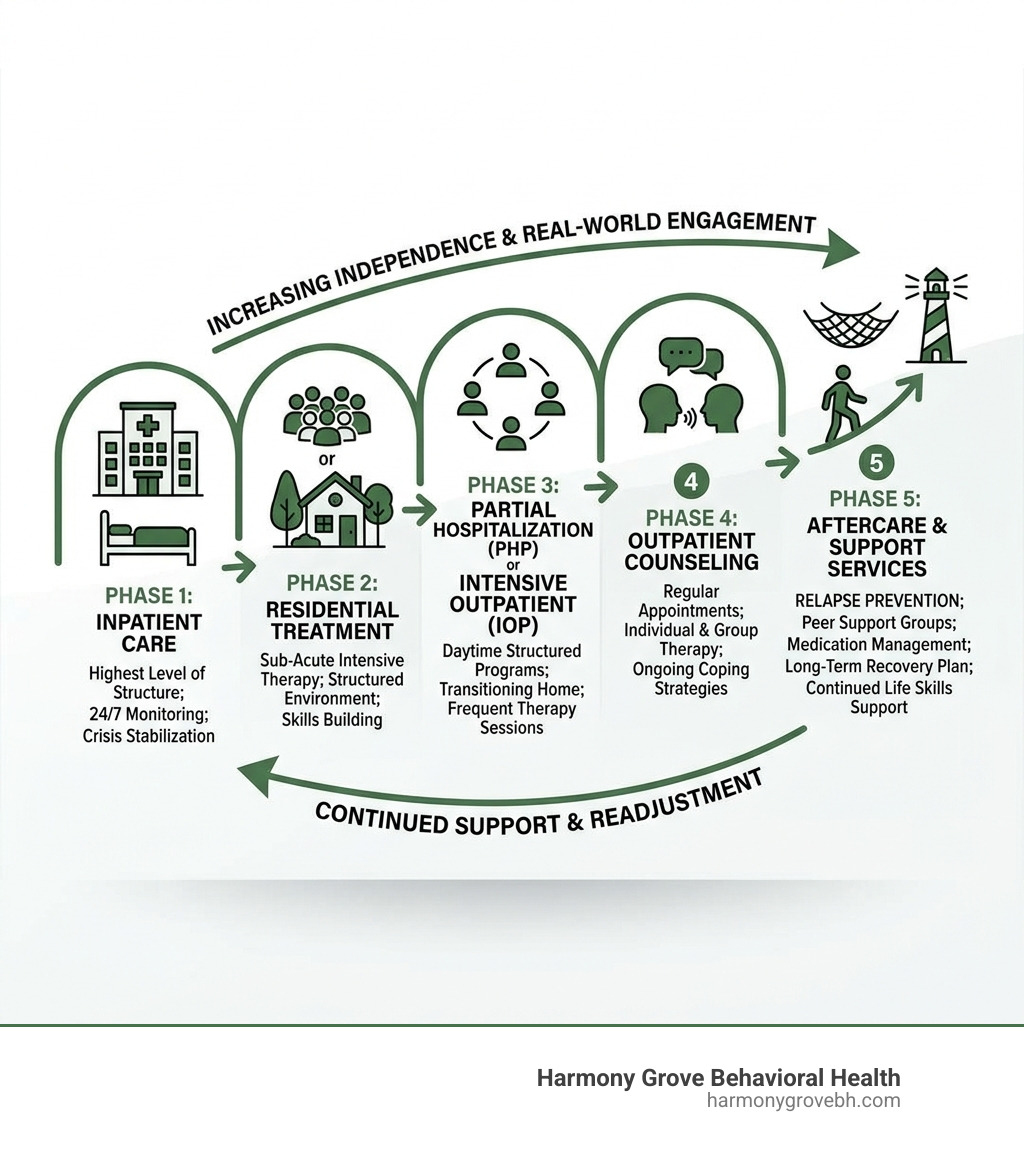
Why Aftercare Planning for Mental Health is Essential for Recovery
When we talk about recovery, we aren’t talking about a one-time event. It is a lifelong journey of management. Scientific research consistently shows that Mental Health Services Houston are most effective when they don’t simply “stop” once a residential or intensive program ends.
The primary goal of aftercare planning mental health is relapse prevention. For those recovering from addiction, the statistics are sobering: 40% to 60% of individuals may experience a relapse without thoughtful preparation. Similarly, over half of patients treated for anxiety or depression may see symptoms return within a year if they lack continued support.
Why is the risk so high? Because the first 90 days post-discharge represent a “high-danger zone.” During this window, the brain is still rewiring, and the lack of a 24/7 structured environment can feel like losing training wheels while riding down a steep hill. A well-structured plan at a Mental Health Rehab Houston facility reduces readmission rates by ensuring that “post-discharge adverse events”—which occur in up to 23% of cases—are caught early.
By sustaining treatment gains through aftercare, we help you transition from being a “patient” to being an empowered individual with a stable, long-term lifestyle.
Core Components of an Effective Aftercare Plan
An effective plan isn’t just a list of phone numbers; it’s a comprehensive strategy. Think of it as a safety net with several interlocking layers. If one strand breaks, the others are there to catch you.
- Medication Management: This is critical. Research shows that communication issues account for 66%–72% of adverse events after discharge. We ensure you have a clear schedule and a local provider to manage prescriptions.
- Outpatient Therapy: Transitioning to individual therapy sessions helps you process real-world stressors as they happen.
- Peer Support Networks: Whether it’s 12-step meetings or specialized groups, connecting with people who “get it” provides accountability that professionals can’t always offer.
- The Aftercare Community: Staying connected to an Aftercare Community provides a sense of belonging and reduces the isolation that often leads to relapse.
- Lifestyle Adjustments: This includes sober housing, stable employment, and spiritual or wellness practices like mindfulness and exercise.
At Harmony Grove, Our Philosophy emphasizes that recovery must address the whole person—not just the symptoms.
Personalizing Aftercare Planning for Mental Health and Co-occurring Disorders
No two people have the same recovery journey. This is especially true when dealing with Co-Occurring Disorders. If someone is battling both addiction and a mental health condition, their aftercare plan must be twice as robust.
Dual Diagnosis Treatment In Houston requires a plan that balances psychiatric care with sobriety milestones. We also utilize trauma-informed care to ensure that the underlying triggers for Depression Treatment In Houston Tx or Anxiety Treatment In Houston Texas are managed safely. Your plan should reflect your specific goals, whether that’s returning to work, mending a marriage, or simply finding peace in daily routines.
Integrating Family Support in Aftercare Planning for Mental Health
We often say that while the individual goes through treatment, the whole family is in recovery. Family involvement is a massive predictor of success. When we look at Who We Treat, we see that patients with strong, educated support networks fare much better.
Family education helps your loved ones recognize warning signs without becoming “recovery police.” It involves setting healthy boundaries—learning when to help and when to step back. By strengthening these dynamics and improving communication skills, we reduce the isolation that so often triggers a return to old habits.
Strategies for Relapse Prevention and Crisis Management
Relapse isn’t usually a sudden “oops.” It’s a slow process that starts long before the actual event. A good aftercare plan teaches you to spot the signs early.
| Relapse Triggers | Protective Factors |
|---|---|
| High-stress work environments | Consistent Addiction Recovery meetings |
| Isolation and loneliness | Daily Recovery Coaching check-ins |
| Unmanaged physical pain | Regular exercise and 7-8 hours of sleep |
| Old “people, places, and things” | Strong boundaries and new sober hobbies |
| Financial or relationship strain | Mindfulness and self-soothing techniques |
Safety planning is a core part of our strategy. This includes identifying your specific warning signs (like irritability or changes in sleep) and having a list of emergency contacts ready. We reinforce coping skills so that when a crisis hits, your “muscle memory” kicks in, and you reach for a phone or a breathing exercise instead of a destructive habit.
Overcoming Challenges in the Discharge Process

The transition from a facility to home is often where the most “noise” occurs. Communication barriers between doctors, therapists, and the patient can lead to medication errors or missed follow-up appointments. In fact, preventable medication errors cost the US billions annually.
To overcome this, we use structured communication tools like ISBAR (Identify, Situation, Background, Assessment, Recommendation) to ensure every team member is on the same page. We also utilize “bullet rounds”—short, high-impact daily meetings—to keep the discharge process moving smoothly from day one.
Modern Health Information Technology (HIT) and telehealth have also revolutionized aftercare. Through telehealth, we can provide Clinical Modalities like CBT or DBT sessions even if you have transportation issues. This ensures continuity of care and keeps your Mental Health at the forefront, no matter where you are in the Houston area.
Frequently Asked Questions about Aftercare
How long should a mental health aftercare plan last?
While everyone is different, a one-year minimum is generally recommended. Research from SAMHSA suggests that outcomes improve significantly when individuals stay engaged in some form of aftercare for at least 12 months. As you gain stability, the intensity of the care might decrease—moving from weekly therapy to monthly check-ins—but the monitoring remains a vital safety net.
What is the role of telehealth in aftercare?
Telehealth is a game-changer for accessibility. It removes the barriers of Houston traffic and busy work schedules. It allows for consistent medication management and therapy sessions, ensuring that you never have to skip a “maintenance” appointment because of logistics.
When should an aftercare plan be reviewed?
An aftercare plan is a living document. It should be reviewed at regular intervals (every 30 to 90 days) or whenever a major life transition occurs—such as starting a new job, moving, or a change in relationship status. If you find yourself struggling, the plan needs to be adjusted immediately to provide more support.
Conclusion
Leaving a structured treatment program shouldn’t feel like jumping out of a plane without a parachute. With proper aftercare planning mental health, you are equipped with a roadmap, a team, and the tools to navigate the “real world” successfully.
At Harmony Grove Behavioral Health, we are committed to holistic wellness. We don’t just treat the crisis; we support the life that follows. Whether you need specialized PTSD Treatment or ongoing outpatient support in Houston, we are here to provide lifelong aftercare.
Recovery is a marathon, not a sprint. You’ve done the hard work of starting the journey—now let’s make sure you have everything you need to finish it. If you or a loved one is ready to build a lasting plan for wellness, reach out to us today. We’re ready to walk this path with you.