

Why Trauma-Informed Care Practices Are Changing How We Heal
Trauma-informed care practices are a set of principles and protocols that shift how providers, organizations, and systems respond to people — moving from “What’s wrong with you?” to “What happened to you?”
Here’s a quick overview of how they work:
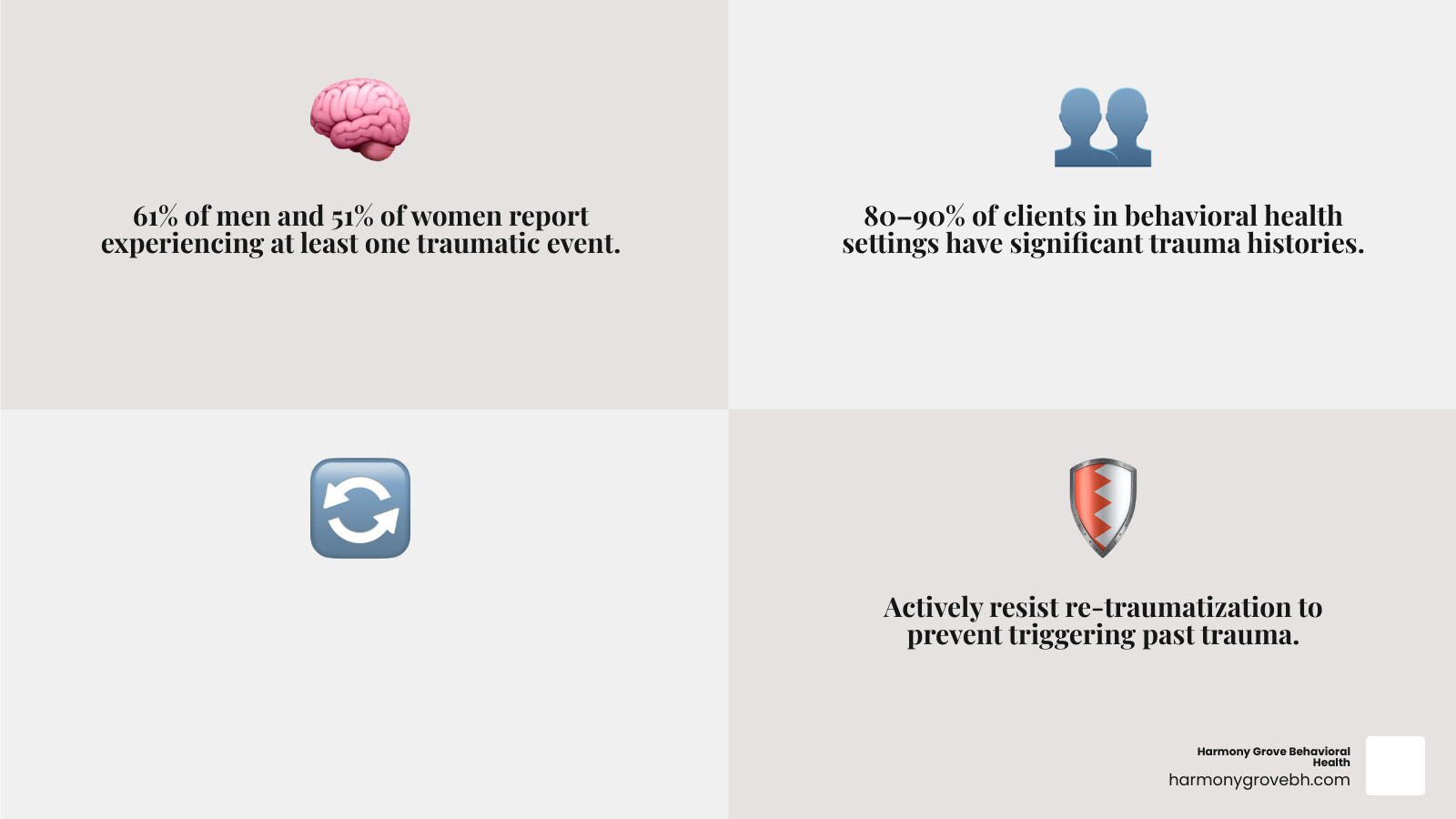
- Realize – Understand how widespread trauma is and how deeply it affects people’s lives.
- Recognize – Identify signs and symptoms of trauma in clients, families, and staff.
- Respond – Integrate trauma knowledge into policies, procedures, and everyday interactions.
- Resist re-traumatization – Actively avoid practices that could trigger or repeat past trauma.
Trauma is far more common than most people realize. Research shows that 61% of men and 51% of women report experiencing at least one traumatic event in their lifetime. In behavioral health settings — like addiction treatment and mental health care — that number climbs even higher, with studies showing 80–90% of clients have significant trauma histories.
Yet for decades, standard care approaches largely ignored this reality.
The result? Well-meaning providers were sometimes making things worse — triggering survival responses, eroding trust, and pushing people away from the help they needed most.
Trauma-informed care is the correction to that. It’s not a single therapy or technique. It’s a fundamental shift in how an entire organization thinks, behaves, and operates — from the front desk to the clinical team.
And for someone balancing recovery with work, relationships, and daily life, that shift can make the difference between staying in treatment and walking out the door.
Understanding the Core Principles of Trauma-Informed Care
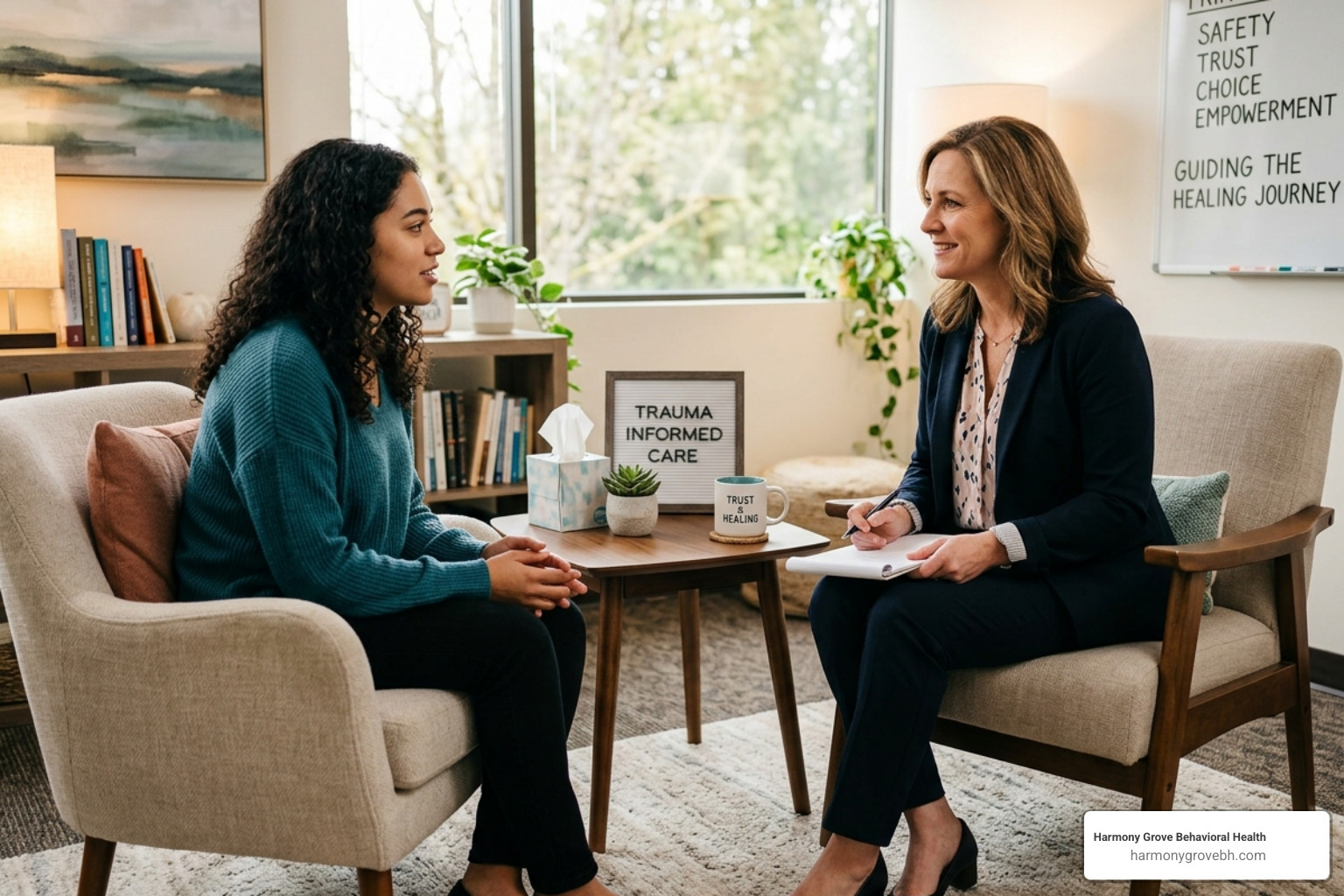
When we talk about trauma informed care practices, we are referring to a framework built on six foundational pillars. These aren’t just “nice to have” ideas; they are the essential Key Ingredients for Trauma-informed Care that ensure a person feels safe enough to actually begin the healing process.
1. Safety
This is the bedrock. Safety must be both physical and emotional. In a clinic, this might mean well-lit hallways and clear exit signs. Emotionally, it means interacting in a way that is predictable and non-threatening. If a client feels like they are walking into a “judgment zone,” their brain stays in survival mode, and no real therapy can happen.
2. Trustworthiness and Transparency
We aim to build trust by being crystal clear about what is happening and why. There are no “hidden agendas.” Organizational decisions are made transparently, and boundaries are maintained consistently. When people have been betrayed by systems or individuals in the past, transparency is the only way to earn their trust back.
3. Peer Support
Lived experience is a powerful tool. Connecting individuals with others who have walked a similar path helps them realize they aren’t alone. Peer support specialists play a vital role in validating a person’s experience and modeling that recovery is possible.
4. Collaboration and Mutuality
In traditional medicine, the doctor is the “expert” and the patient is the “subject.” We flip that. We believe the client is the expert on their own life. This principle levels the power dynamic, creating a partnership where we work with the person, not on them.
5. Empowerment, Voice, and Choice
Trauma often involves a total loss of power. To heal, a person needs to regain that power. We prioritize giving clients a voice in their treatment plan and choices in how they receive care. This builds the self-efficacy needed for long-term success.
6. Cultural, Historical, and Gender Issues
We cannot provide effective care without recognizing the impact of historical and systemic trauma. This includes understanding the unique experiences of marginalized communities and ensuring our practices are culturally humble and responsive.
Comparing Traditional vs. Trauma-Informed Care
| Feature | Traditional Care | Trauma-Informed Care |
|---|---|---|
| Primary Question | What is wrong with you? | What has happened to you? |
| Focus | Eliminating symptoms/pathology | Building resilience and adaptation |
| Power Dynamic | Hierarchical (Provider has all power) | Collaborative (Shared decision-making) |
| Perspective on Behavior | Behavior is a problem to be managed | Behavior is a survival/coping mechanism |
| Goal | Compliance | Empowerment and healing |
Why Trauma Informed Care Practices are Essential in Modern Healthcare
The shift toward trauma informed care practices isn’t just a trend; it’s a necessary evolution based on hard data. When we ignore trauma, we miss the “why” behind most health behaviors.
In behavioral health, trauma is often the invisible thread connecting mental health struggles and substance use. For example, many people who seek Dual Diagnosis Treatment in Houston are using substances as a way to “self-medicate” the pain of past events. Without addressing that trauma, the risk of relapse is incredibly high.
The impact is also felt in general healthcare and education. According to the Scientific research on PTSD guidelines, between 15% and 75% of trauma-exposed individuals develop significant symptoms. If a healthcare system doesn’t account for this, it risks being seen as a source of stress rather than a source of healing.
The Impact of Adverse Childhood Experiences (ACEs)
We cannot discuss trauma without mentioning ACEs. Statistics show that over 75% of high school students report having experienced at least one Adverse Childhood Experience. These can range from physical abuse to living in a household with substance use or mental illness.
The higher a person’s “ACE score,” the higher their risk for chronic health conditions later in life, including heart disease, depression, and addiction. By implementing trauma-informed practices early, we can help break the cycle of Co-Occurring Disorders and provide the specialized PTSD Treatment that targets the root cause of the distress.
Benefits for Patients, Staff, and Organizations
When an organization commits to being trauma-informed, everyone wins:
- Patients: Experience better engagement, higher satisfaction, and improved long-term outcomes.
- Staff: Report reduced burnout and compassion fatigue because they have the tools to understand “difficult” behaviors as survival responses.
- Organizations: See a reduction in avoidable care costs and lower staff turnover.
At Harmony Grove, we’ve seen how these practices transform the environment for our Depression Treatment in Houston TX, creating a space where people feel truly seen and supported. For more on this, check out our guide on How to Master Trauma-Informed Care: Best Practices.
How to Implement Trauma Informed Care Practices in Your Organization
Becoming a trauma-informed organization is a marathon, not a sprint. Research suggests it typically takes three to five years to fully embed these values into every aspect of an organization’s functioning. It requires a complete culture shift.
If you are looking to implement these changes, follow this Practical Guide for Implementing a Trauma-Informed Approach and these key steps:
- Build Awareness and Generate Buy-In: It starts at the top. Leadership must be fully invested in the change.
- Conduct a Baseline Assessment: Review your current policies, physical environment, and staff competencies to see where you stand.
- Support Workforce Wellness: You cannot provide trauma-informed care if your staff is traumatized and unsupported.
- Create a Safe Environment: Look at your physical space. Is it welcoming? Is it private? Does it promote a sense of calm?
- Engage the People You Serve: Include the voices of clients in your planning. They are the best judges of whether your practices are working.
Recognizing Signs of Trauma and Preventing Re-traumatization
A major goal of trauma informed care practices is to “do no harm.” Re-traumatization occurs when a situation or interaction replicates a person’s past trauma, triggering a “fight, flight, or freeze” response.
Common triggers in healthcare settings include:
- Feeling powerless or unheard.
- Invasive physical procedures without clear explanation.
- The use of seclusion or physical restraints.
- Loud noises, bright lights, or crowded waiting rooms.
By recognizing these signs early, we can adjust our approach. For instance, in TIP 57: Trauma-informed Care in Behavioral Health Services, providers are encouraged to view “non-compliance” as a potential survival response rather than a character flaw. This perspective is vital when helping someone navigate a Dual Diagnosis.
Staff Wellness and Training Protocols
We often forget that providers are human, too. Witnessing the trauma of others can lead to Secondary Traumatic Stress or compassion fatigue. A trauma-informed organization prioritizes staff wellness by:
- Providing regular training on self-care and boundary setting.
- Offering “debriefing” sessions after difficult incidents.
- Creating a culture where it is okay to ask for help.
- Ensuring workloads are manageable to prevent burnout.
Real-World Applications of Trauma Informed Care Practices
What does this look like in the real world? It’s the difference between a “punitive” environment and a “restorative” one.
Strategies for Schools and Behavioral Health Services
In schools, trauma-informed care might mean replacing detention with restorative circles where students can talk about the emotions behind their behavior. It involves building strong relationships and recognizing “red flags” early.
In behavioral health services, it means creating “chill spaces” where clients can go to self-regulate if they feel overwhelmed. It involves using peer support specialists to bridge the gap between clinical staff and the client. For those seeking Anxiety Treatment in Houston Texas, these small environmental changes can make a massive difference in their ability to participate in therapy.
Addressing Cultural, Historical, and Sociocultural Factors
We must also apply a “sociocultural lens” to our work. Trauma doesn’t happen in a vacuum. It is often tied to systemic oppression, poverty, and historical trauma passed down through generations.
A truly trauma-informed approach centers DEIAJ (Diversity, Equity, Inclusion, Accessibility, and Justice). This means:
- Using inclusive language.
- Recognizing the impact of microaggressions.
- Understanding that for some communities, “the system” has historically been a source of trauma, not help.
At Harmony Grove, we integrate these considerations into our Dual Diagnosis Treatment in Houston, ensuring that every person who walks through our doors feels respected and understood within the context of their unique identity.
Frequently Asked Questions about Trauma-Informed Care
How does trauma-informed care differ from traditional care?
The biggest difference is the shift in focus. Traditional care focuses on “fixing” a problem or a symptom. Trauma-informed care focuses on understanding the context of that symptom. It moves from a hierarchical power structure to a collaborative one, viewing behaviors as adaptive survival mechanisms rather than pathologies.
What are the first steps for an organization to become trauma-informed?
The first step is always a baseline assessment. You need to understand your starting point. From there, the focus should be on building awareness among all staff (from the front desk to the CEO) and prioritizing staff wellness. You cannot build a trauma-informed system on the backs of burnt-out employees.
How do these practices help prevent re-traumatization?
They prevent it by prioritizing predictability, transparency, and choice. When a client knows exactly what to expect and feels they have a say in the process, their “survival brain” can relax. Avoiding invasive or coercive procedures (like restraints) and creating an emotionally safe environment ensures that the treatment process itself doesn’t become a new source of trauma.
Conclusion
Implementing trauma informed care practices is one of the most significant steps we can take toward a more compassionate and effective healthcare system. By shifting our perspective and prioritizing safety, trust, and empowerment, we create a space where true recovery is possible.
At Harmony Grove Behavioral Health, we are proud to serve the Houston community with holistic, community-focused care. We believe that everyone deserves a treatment experience that honors their history and supports their future. Whether you are dealing with addiction, mental health challenges, or both, our evidence-based, trauma-informed programming is designed to meet you where you are.
Recovery isn’t just about stopping a behavior; it’s about healing the heart and mind. If you or a loved one are ready to take that step, we are here to walk with you.