

When Depression Feels Too Heavy to Carry Alone
Therapy for depression near me is something thousands of Houston residents search for every day — and if you’re one of them, here’s what you need to know right now:
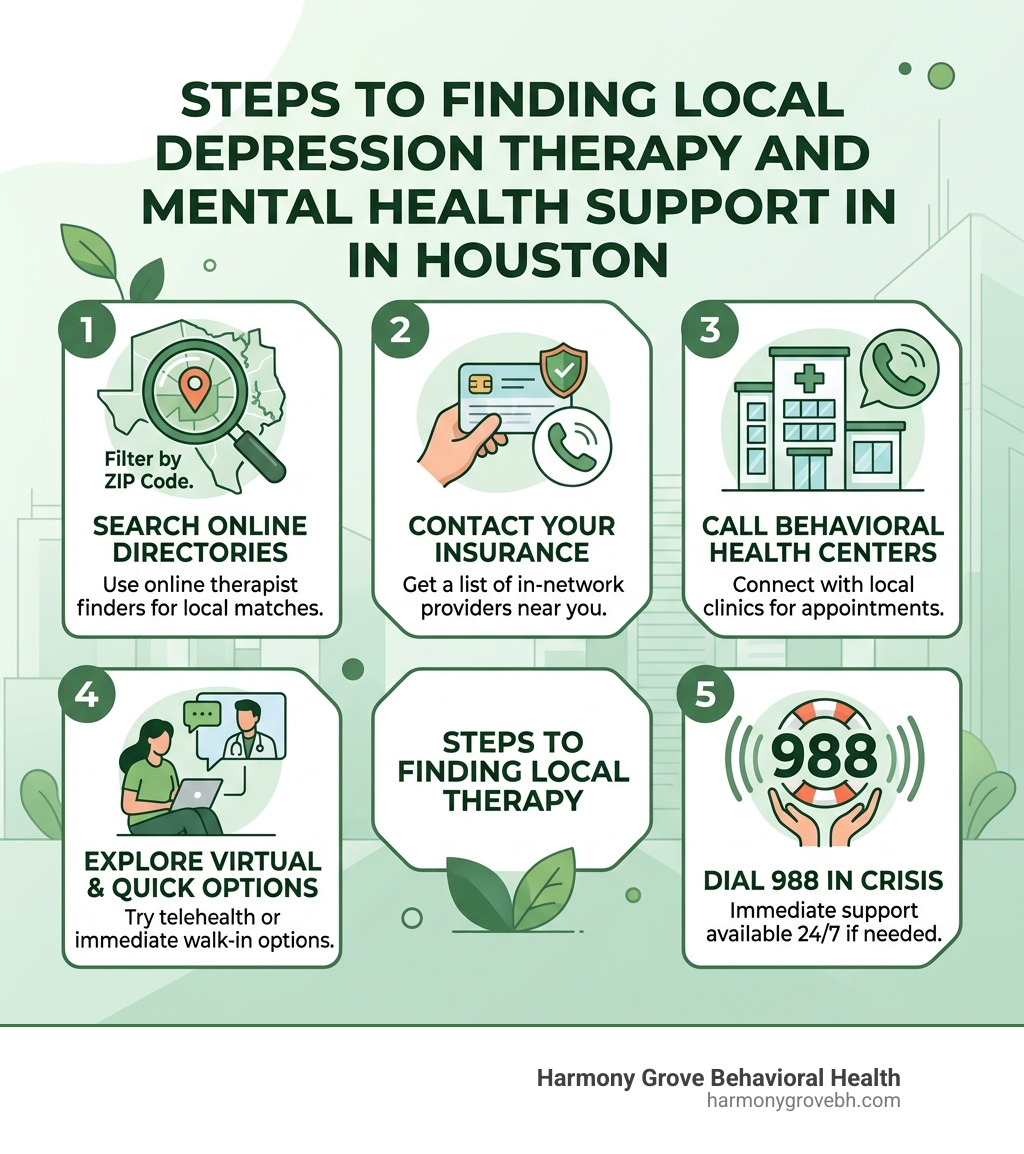
Quick ways to find local depression therapy:
- Search online directories like Psychology Today or ADAA’s therapist finder — filter by ZIP code and specialty
- Call your insurance provider to get a list of in-network therapists near you
- Contact a local behavioral health center directly for same-week appointments
- Try walk-in or virtual options (like MinuteClinic) if you need to talk to someone quickly
- Dial 988 if you are in crisis and need immediate support
Depression is one of the most common mental health conditions in the United States. Around 8% of adults experience Major Depressive Disorder every year. Yet many people wait months — sometimes years — before reaching out for help.
That wait makes things harder. Depression has a way of convincing you that nothing will change. It’s not telling you the truth.
The good news: effective, accessible therapy is available in Houston right now — in-person, virtual, and through outpatient programs that work around your schedule.
Whether you’re dealing with persistent sadness, exhaustion, or something darker, this guide will walk you through exactly how to find the right support near you.
Understanding Depression: Signs, Symptoms, and Types
Depression is often misunderstood as just “being sad,” but those of us who have lived through it know it is much more complex. It is a pervasive heaviness that affects how you think, feel, and move through the world. It can rob you of your motivation, your sleep, and even your sense of self-worth.
Common symptoms of depression include:
- Persistent sadness or “emptiness”: A low mood that doesn’t go away, even when good things happen.
- Fatigue and low energy: Feeling like you are moving in slow motion or that even simple tasks (like brushing your teeth) require Herculean effort.
- Loss of interest: A lack of pleasure in hobbies or social activities you used to love.
- Sleep and appetite changes: Sleeping too much or not being able to sleep at all; eating significantly more or losing your appetite entirely.
- Difficulty concentrating: “Brain fog” that makes it hard to make decisions or focus on work.
- Irritability: Especially in men, depression often manifests as anger or frustration rather than outward sadness.
There isn’t just one “type” of depression. Understanding which version you are facing can help us tailor your care. Major Depressive Disorder (MDD) is the most common diagnosis, but many women experience Postpartum Depression, with estimates suggesting 10-20% of women struggle during or after pregnancy. Others face Seasonal Affective Disorder (SAD), where the lack of sunlight in winter months triggers a depressive episode. There is also Persistent Depressive Disorder (Dysthymia), which is a milder but long-lasting form of depression that can stay with a person for two years or more.
If you are struggling with these symptoms, learning more about mental health services can be the first step toward reclaiming your life.
How Depression Differs from Normal Sadness
It is important to distinguish between clinical depression and the natural sadness we all feel. Sadness is usually a reaction to a specific event—a breakup, a disappointment, or a stressful week. It typically fades as time passes or circumstances change.
Grief is also different. While grief can feel like depression, it usually comes in waves and is tied to a specific loss. In depression, the low mood is often “stuck.” It is persistent and interferes with your ability to function in daily life. If your “blues” have lasted more than two weeks and are making it hard to work, maintain relationships, or care for yourself, it is time to look for therapy for depression near me.
Identifying the Need for Therapy for Depression Near Me
How do you know when you’ve crossed the line from “handling it” to needing professional help? One of the biggest indicators is a sense of hopelessness—the feeling that things will never get better.
Early intervention is vital. Research shows that the sooner you start treatment, the more effective it is and the faster you find relief. If you are experiencing thoughts of self-harm or feel that life is no longer worth living, this is a clear sign that immediate intervention is required. You don’t have to wait until you are in a total crisis to reach out. Many people in Houston find that Depression Treatment in Houston TX provides the structure they need to stop a downward spiral before it hits bottom.
Effective Treatment Options and Therapy Modalities

When you start looking for therapy for depression near me, you’ll likely hear the term “evidence-based.” This simply means the therapy has been scientifically tested and proven to work. At Harmony Grove Behavioral Health, we believe in using what works while keeping the approach warm and human.
The most common and effective modalities include:
- Cognitive Behavioral Therapy (CBT): This focuses on the link between thoughts, feelings, and behaviors.
- Interpersonal Therapy (IPT): This looks at your relationships and social functioning, helping you improve communication to boost your mood.
- Psychodynamic Therapy: This explores how your past experiences and unconscious patterns might be fueling your current depression.
- Acceptance and Commitment Therapy (ACT): This helps you stay present and move toward your values even when you are experiencing difficult emotions.
If you also struggle with racing thoughts or constant worry, you might find that Anxiety Treatment in Houston Texas can be integrated into your depression care for a more holistic result.
Cognitive Behavioral Therapy (CBT) and Beyond
CBT is often called the “gold standard” for depression. It works by identifying “cognitive distortions”—those negative thought patterns like “I’m a failure” or “Nothing will ever work out”—and challenging them with more realistic perspectives.
Another key part of modern depression therapy is Behavioral Activation. When we are depressed, we stop doing things. Behavioral Activation helps you slowly re-introduce activities that provide a sense of accomplishment or pleasure, which helps “kickstart” your brain’s reward system. For those whose depression is rooted in past events, PTSD Treatment can help address the underlying trauma that keeps the depression active.
Addressing Treatment-Resistant Depression
Sometimes, standard talk therapy or a single medication isn’t enough. This is known as Treatment-Resistant Depression (TRD). If you’ve tried multiple antidepressants or months of therapy without feeling better, don’t lose hope—it just means we need a more comprehensive approach.
Treatment for TRD often involves:
- Comprehensive Evaluations: Looking for co-occurring issues like thyroid problems, vitamin deficiencies, or undiagnosed anxiety.
- Medication Management: Adjusting dosages or combining different types of medications.
- Advanced Interventions: Procedures like Electroconvulsive Therapy (ECT) are now safer and more effective than ever for severe cases.
- Holistic Care: Integrating nutrition, exercise, and sleep hygiene into your clinical plan.
For some, a more intensive environment is necessary to achieve stability. Exploring Long-term Mental Health Facilities in Houston Texas can provide a sanctuary for those who need round-the-clock support to break through resistant symptoms.
How to Access Therapy for Depression Near Me
Finding care shouldn’t be another source of stress. In Houston, you have several ways to access support depending on your needs and schedule.
| Service Type | Best For… | Typical Access |
|---|---|---|
| In-Person Therapy | Building deep rapport and having a “safe space” outside the home. | Weekly scheduled appointments at a clinic. |
| Virtual Therapy | Busy professionals, parents, or those with transportation issues. | Video calls from your phone or laptop. |
| Walk-In/Retail Clinics | Immediate, short-term support for life stressors. | Same-day visits at places like MinuteClinic. |
| Intensive Outpatient (IOP) | Those who need more than once-a-week therapy but want to live at home. | Several hours of group and individual therapy per week. |
To find these services, you can use directories like Psychology Today or the ADAA website. Always remember to verify your insurance coverage beforehand. If you are also dealing with substance use issues alongside your depression, a Mental Health Rehab Houston program can address both concerns simultaneously.
What to Expect During Your First Session
The first session is usually called an “intake” or “assessment.” It’s less about “doing therapy” and more about “getting to know you.” Your therapist will ask about your history, your current symptoms, and what you hope to achieve.
This is also your chance to interview the therapist. Do you feel heard? Is the environment welcoming? Building a strong rapport is one of the biggest predictors of success in therapy. You will likely set some initial goals, such as “improving my sleep” or “feeling less irritable at work.” If your situation involves both mental health and addiction, we may discuss Dual Diagnosis Treatment in Houston to ensure we are treating the whole person.
Finding Specialized Therapy for Depression Near Me
Not all depression is the same, and sometimes you need a specialist. You might look for local clinics that specialize in certain demographics, such as first responders, young adults, or the LGBTQ+ community.
Community resources are also invaluable. Support groups, like those offered by the Depression and Bipolar Support Alliance (DBSA), allow you to connect with others who truly understand what you are going through. Peer support can reduce the isolation that depression loves to create. For those facing multiple challenges at once, understanding Co-occurring Disorders can help you find a provider equipped to handle complex cases.
Frequently Asked Questions about Depression Therapy
Does insurance cover depression therapy?
Yes, most insurance plans cover mental health services as part of their essential benefits. However, “coverage” can mean different things. Some therapists are “in-network,” meaning they have a contract with your insurance to provide services at a set rate. Others are “out-of-network,” which may require you to pay upfront and seek reimbursement.
Many clinics now offer online pre-check tools to help you see exactly what your co-pay will be. If you are looking for Mental Health Services Houston, we recommend calling the facility directly; they can often do the heavy lifting of verifying your benefits for you.
How long does therapy typically take?
There is no “one size fits all” answer, but many people see significant improvement within 12 to 20 sessions of evidence-based therapy like CBT. Some people find that short-term therapy gives them the tools they need to move forward, while others prefer long-term “maintenance” therapy to ensure they stay well. Realistic expectations are key—you didn’t fall into depression overnight, and it takes time to climb back out. The goal is long-term wellness, not just a temporary “fix.”
When should I seek immediate help?
If you are in a crisis, you should not wait for a scheduled therapy appointment. If you are experiencing:
- Active thoughts of suicide or a plan to hurt yourself.
- Severe hallucinations or a break from reality.
- An inability to care for your basic needs (eating, hygiene).
Please dial 988 for the Suicide & Crisis Lifeline. This is a free, 24/7 service that connects you with trained counselors. You can also head to the nearest emergency room or call 911 if you are in immediate danger.
Conclusion
Finding therapy for depression near me is a brave first step. It is an act of defiance against a disorder that wants you to stay isolated and hopeless. At Harmony Grove Behavioral Health, we are proud to be part of the Houston community, offering holistic, trauma-informed care that treats you as a person, not just a diagnosis.
Whether you need individual counseling, a structured outpatient program, or lifelong aftercare support, we are here to walk with you. You don’t have to carry the weight of depression alone. Our team is dedicated to helping you find the energy, joy, and connection that depression has taken away.
Start your journey to wellness today and let us help you find the light again.