

Finding the Right Depression Treatment Center in Houston
If you’re looking for a depression treatment center Houston has several strong options across different levels of care. Here’s a quick overview to help you find the right fit:
| Level of Care | Best For | Hours Per Week |
|---|---|---|
| Inpatient/Residential | Severe symptoms, crisis stabilization | 24/7 |
| Partial Hospitalization (PHP) | Step-down from inpatient, high structure needed | 20+ hours |
| Intensive Outpatient (IOP) | Moderate symptoms, maintaining work/life | 9-20 hours |
| Outpatient (OP) | Mild symptoms, ongoing maintenance | Varies |
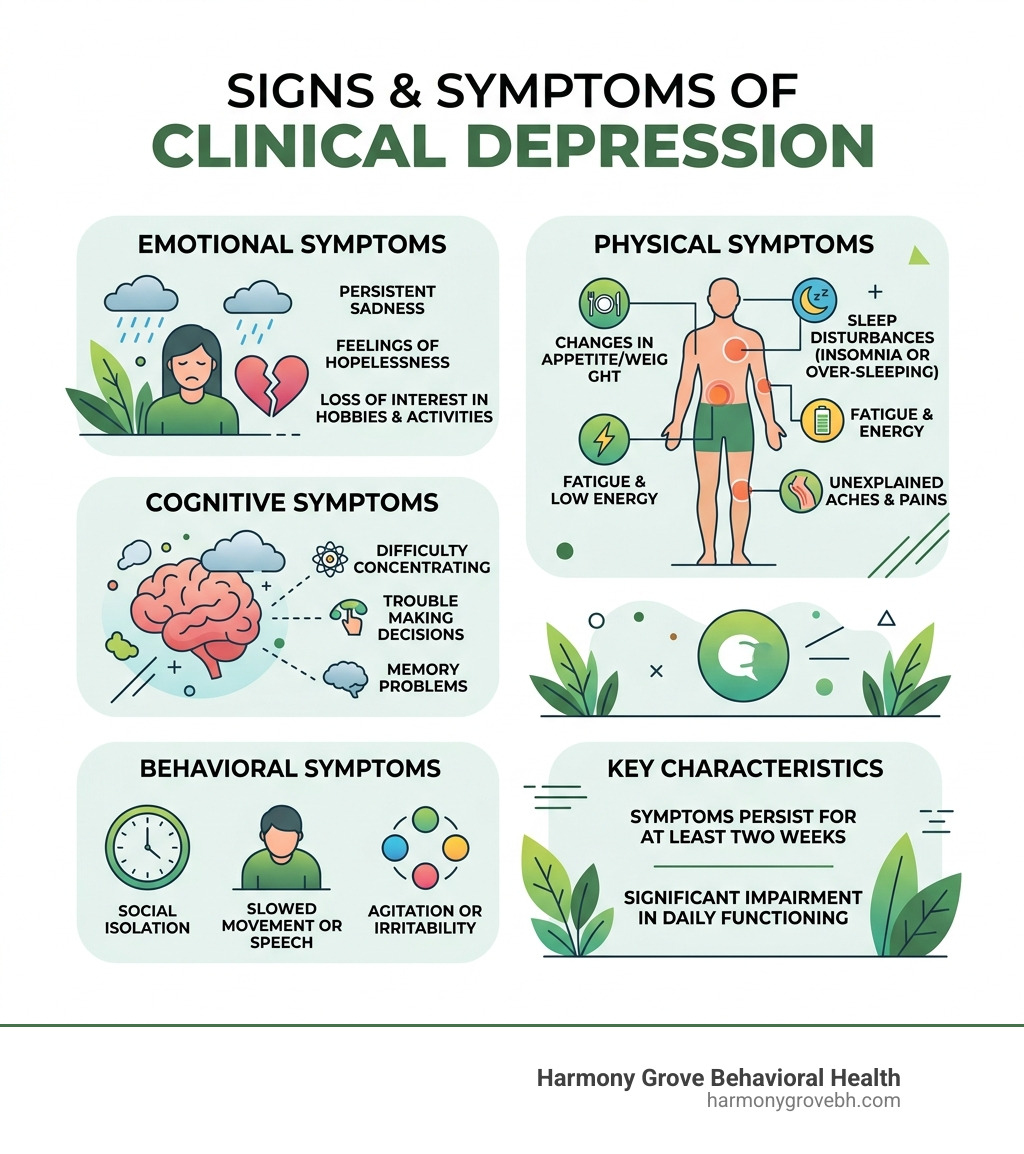
Depression is more than feeling sad for a few days. It’s a condition that causes persistent sadness, loss of interest in things you once enjoyed, and a noticeable drop in your ability to function — at work, at home, and in relationships.
And it’s incredibly common. Depression is the leading cause of disability worldwide, affecting more than 300 million people globally. In Houston, tens of thousands of adults are living with it right now — many without treatment.
The good news? Depression is treatable. With the right support, people genuinely do get their energy, clarity, and sense of purpose back.
This guide covers the best depression treatment centers in Houston, what to expect from each, and how to take the first step toward feeling better.
Understanding the Need for a Depression Treatment Center Houston
When we talk about clinical depression, we aren’t just talking about a “bad mood” or a case of the Mondays. It is a complex medical condition that can stem from a variety of sources, including genetics, neurotransmitter imbalances (like serotonin and dopamine), hormonal shifts, and significant life traumas. For many in our community, finding a depression treatment center Houston is the first step in untangling these factors.
There are several different types of depression that residents in the Houston area may face:
- Major Depressive Disorder (MDD): Characterized by severe symptoms that interfere with the ability to work, sleep, study, and eat.
- Persistent Depressive Disorder (Dysthymia): A depressed mood that lasts for at least two years. While symptoms may not be as severe as MDD, they are chronic and draining.
- Seasonal Affective Disorder (SAD): Often occurring during the winter months when there is less natural sunlight.
- Postpartum Depression: Much more serious than the “baby blues,” this affects women after childbirth and requires specialized care.
Scientific research, including work done at the McGovern Medical School Treatment-Resistant Depression Program, highlights that some individuals do not respond to standard medications. This is known as Treatment-Resistant Depression (TRD). In these cases, a specialized depression treatment center Houston can provide advanced interventional therapies that go beyond basic talk therapy.

If you are struggling with your mental health, you don’t have to navigate it alone. You can find more info about Mental Health services to see how professional support can change the trajectory of your life.
Recognizing When to Seek Professional Help
It can be difficult to know when “toughing it out” is no longer an option. We often tell our clients that if your symptoms are causing functional impairment—meaning you are struggling to show up for work, care for your family, or maintain your hygiene—it is time to seek help.
Early intervention is one of the biggest predictors of a successful recovery. Seeking help early can shorten the duration of a depressive episode and prevent it from spiraling into a more severe crisis. If you or a loved one are experiencing suicidal ideation or thoughts of self-harm, this is a clear sign that immediate professional intervention is required. You can find more info about Depression Treatment in Houston TX to understand the specialized care pathways available.
The Impact of Untreated Chronic Depression
Leaving depression untreated isn’t just about feeling unhappy; it has real-world consequences for your physical health and your future. Chronic depression, or dysthymia, can lead to long-term health risks such as heart disease, a weakened immune system, and chronic pain.
Furthermore, the strain on relationships can be immense. Depression often leads to self-isolation, which can alienate friends and family members just when you need them most. For those looking for intensive support, you can find more info about Long-term Mental Health Facilities in Houston Texas to see how residential or long-term care can provide the stability needed for healing.
Levels of Care at a Depression Treatment Center Houston
Choosing the right level of care is essential for effective treatment. Houston offers a full spectrum of services, ranging from highly structured 24/7 environments to flexible outpatient programs.
| Program Type | Supervision Level | Environment | Ideal Candidate |
|---|---|---|---|
| Inpatient | 24/7 Medical Staff | Hospital or Residential Facility | Individuals in crisis or at risk of self-harm. |
| PHP | Daytime (6-8 hours) | Clinical Center | Those needing high structure but can sleep at home. |
| IOP | Flexible (3-4 hours) | Clinical Center | Individuals balancing work/school with recovery. |
Inpatient care provides the most stability, offering a stress-free environment away from daily triggers. This level of care is often necessary for stabilization. To learn more about structured recovery environments, you can find more info about Mental Health Rehab Houston.
Partial Hospitalization Programs (PHP)
A Partial Hospitalization Program, or PHP, is often referred to as “day treatment.” It provides a bridge between inpatient care and traditional outpatient services. In a Houston PHP, you might spend five days a week at the facility participating in intensive therapy and medical monitoring, but you return to your own home or a sober living environment at night. This allows for a high level of clinical support while you begin to reintegrate into your normal life. You can find more info about Mental Health Services Houston to see if this structured approach fits your needs.
Intensive Outpatient Programs at a Depression Treatment Center Houston
For many people, an Intensive Outpatient Program (IOP) is the “sweet spot” of treatment. It offers flexible scheduling—often with evening or morning sessions—so you can continue to work or attend school. The focus in an IOP is on community integration and real-world application. You learn coping skills in the morning and practice them in your actual life in the afternoon.
This level of care is particularly effective for managing co-occurring issues. For example, if your depression is tied to high levels of stress or worry, you can find more info about Anxiety Treatment in Houston Texas to see how these programs address multiple facets of mental health simultaneously.
Evidence-Based Therapies and Innovative Approaches
At any reputable depression treatment center Houston offers, you should expect to find evidence-based therapies. These are treatments that have been scientifically tested and proven to work.
- Cognitive Behavioral Therapy (CBT): This is the “gold standard” for depression. It helps you identify negative thought patterns and replace them with more realistic, positive ones.
- Dialectical Behavior Therapy (DBT): Originally developed for borderline personality disorder, DBT is excellent for depression as it teaches emotional regulation and distress tolerance.
- Medication Management: Psychiatrists work with you to find the right balance of medications, such as SSRIs or SNRIs, to help regulate your brain chemistry.
For those dealing with depression as a result of past trauma, specialized approaches like EMDR (Eye Movement Desensitization and Reprocessing) can be life-changing. You can find more info about PTSD Treatment to see how trauma-informed care is integrated into depression recovery.
Holistic and Alternative Treatment Modalities
While clinical therapies are the foundation of treatment, we believe in treating the whole person. This is why many Houston centers incorporate holistic practices. Mindfulness and meditation help regulate the nervous system, while yoga and exercise can naturally boost endorphins. Some centers even offer more unique approaches like equine therapy or art therapy to help clients express emotions that are hard to put into words.
Specialized Dual Diagnosis Care at a Depression Treatment Center Houston
It is incredibly common for depression to go hand-in-hand with substance abuse. In fact, research shows that around 20.4 million American adults had a co-occurring disorder in the past year. Many people use alcohol or drugs to “numb” the pain of depression, which only makes the symptoms worse in the long run.
Integrated treatment—where both the depression and the substance use are treated at the same time by the same team—is considered the most effective approach. You can find more info about Dual Diagnosis Treatment in Houston and more info about Co-occurring Disorders to understand why treating both is vital for preventing relapse.
Navigating Admissions, Insurance, and Costs in Houston
We know that the financial aspect of treatment can be a major source of stress. However, under the Affordable Care Act (ACA), mental health and substance use services are considered “essential health benefits.” This means that most insurance plans are required to provide coverage for depression treatment.
Many Houston treatment centers are in-network with major providers like Blue Cross Blue Shield, Aetna, and Cigna. If you are worried about your job, the Family and Medical Leave Act (FMLA) can provide up to 12 weeks of job-protected leave for you to seek necessary medical treatment for a serious health condition like clinical depression.
The admission process usually starts with a free confidential assessment. During this clinical evaluation, a professional will help determine the right level of care for you based on your symptoms and history.
Specialized Programs for Diverse Demographics
Depression doesn’t look the same for everyone. A depression treatment center Houston may offer specialized tracks for different groups:
- Adolescents: Focusing on school-related stress, social media impact, and family dynamics.
- Young Adults: Addressing “failure to launch” syndrome and the transition to independence.
- Women’s Programs: Focusing on postpartum issues, trauma, and unique societal pressures.
- Veterans: Providing trauma-informed care specifically for those who have served.
Frequently Asked Questions about Depression Treatment
How long does depression treatment typically last?
There is no “one-size-fits-all” answer, but many effective therapy courses last between 16 to 20 sessions. For more intensive programs like PHP or IOP, clients may stay for 30 to 90 days, depending on their progress and the severity of their symptoms.
Does insurance cover inpatient and outpatient depression care?
Yes, most major insurance plans cover both inpatient and outpatient care. The specific amount of coverage depends on your individual plan. Most centers in Houston offer insurance verification services to help you understand your out-of-pocket costs before you begin.
What are the emergency resources for a mental health crisis in Houston?
If you are in immediate danger, call 911 or go to the nearest emergency room. For immediate support during a crisis, you can use the following:
- National Suicide Prevention Lifeline: Call or text 988.
- The Harris Center for Mental Health and IDD: Offers a 24/7 crisis line for Houston residents.
- Crisis Text Line: Text HOME to 741741.
Conclusion
Living with depression can feel like you’re carrying a heavy weight that no one else can see. But you don’t have to carry it forever. At Harmony Grove Behavioral Health, we are dedicated to providing the residents of Houston with a path toward lasting recovery.
Our approach is rooted in holistic, community-focused care. We combine evidence-based practices with trauma-informed programming to ensure that we aren’t just treating your symptoms, but addressing the root causes of your pain. We believe that recovery is a lifelong journey, which is why we offer lifelong aftercare support and robust relapse prevention strategies to help you maintain your progress long after you leave our suit on Mangum Road.
You deserve to feel like yourself again. If you’re ready to take that first step, Start your journey with an Intensive Outpatient Program in Houston and let us help you find your way back to a life of energy, clarity, and hope.