

Why Psychological Treatment for Depression Is Worth Understanding Before You Start
Psychological treatment for depression is the use of structured, evidence-based therapy to reduce depressive symptoms, change harmful thinking patterns, and build long-term resilience.
The main types recommended by the American Psychological Association (APA) include:
- Cognitive-Behavioral Therapy (CBT) – 6 to 20 weekly sessions; targets negative thought patterns and behaviors
- Interpersonal Psychotherapy (IPT) – 16 to 20 weekly sessions; focuses on relationship problems driving depression
- Behavioral Therapy – 20 to 24 weekly sessions; re-engaging you with rewarding activities
- Mindfulness-Based Cognitive Therapy (MBCT) – 8 weekly group sessions; reduces rumination and relapse risk
- Psychodynamic Therapy – 3 to 80 sessions; explores unconscious patterns from early life
- Supportive Therapy – 4 to 20 sessions; builds coping skills through the therapeutic relationship
- Cognitive Therapy – 8 to 28 sessions; directly challenges negative core beliefs
Here is the thing most people don’t realize: these therapies don’t just help you feel better. Research shows they can actually change how your brain works — strengthening neural connections, calming the stress response, and building new thought habits that last.
Depression affects roughly one in six women and one in eight men at some point in their lives. In Australia alone, around one million people experience it in any given year. In the U.S., nearly 7% of adults face a major depressive episode annually.
And yet, most people wait too long to get help — or aren’t sure where to start.
If you’re managing depression alongside work, relationships, or substance use challenges, understanding your therapy options is the first step toward real, lasting change.
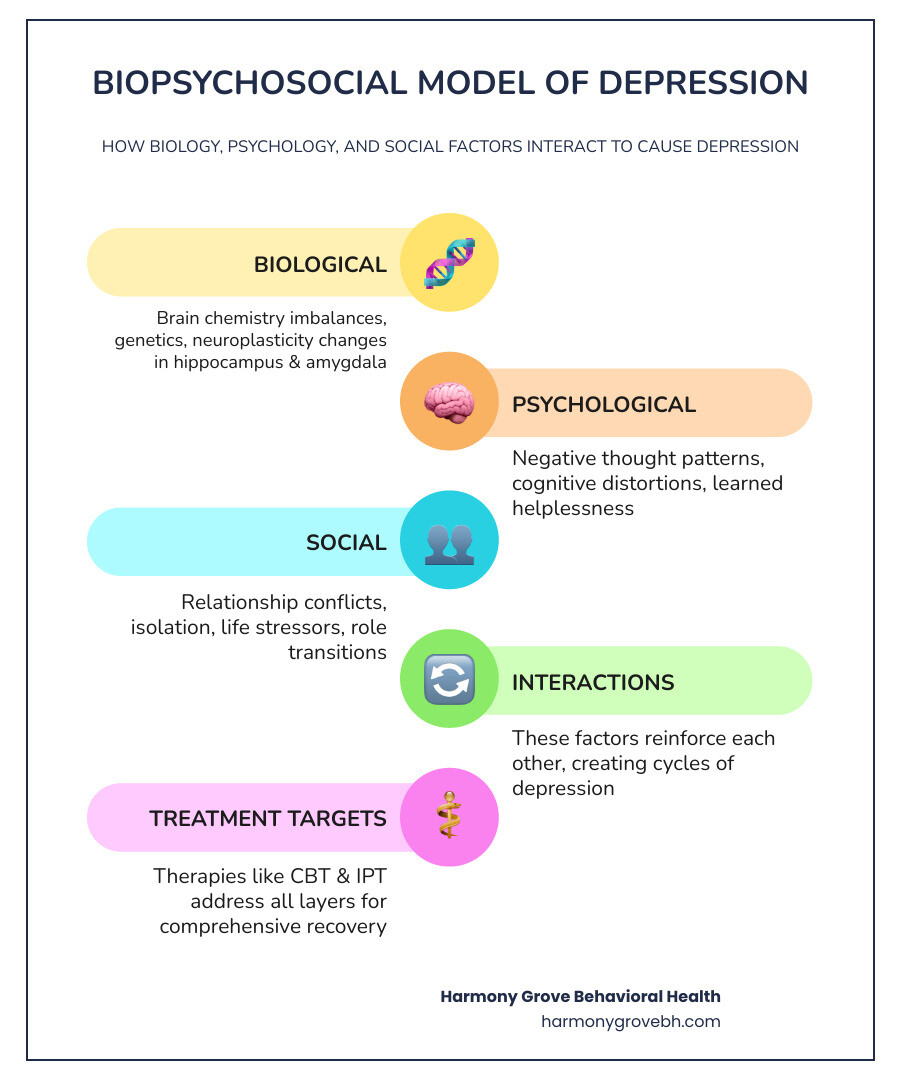
Understanding Evidence-Based Psychological Treatment for Depression
When we talk about the “gold standard” of care, we are referring to Depression Treatments for Adults that have been rigorously tested in clinical trials. At Harmony Grove Behavioral Health, we believe that understanding the science behind your care is empowering. You aren’t just a passive recipient of a “cure”; you are an active participant in a process designed to help you reclaim your life.

The American Psychological Association (APA) provides clear clinical practice guidelines to ensure that patients receive interventions with a proven track record. These guidelines aren’t just for doctors; they are tools for us to use together. When you enter Mental Health treatment, we look at your unique history, the severity of your symptoms, and your personal preferences to decide which path is best.
The Role of Neuroplasticity in Recovery
You might have heard the term “neuroplasticity” tossed around in podcasts or health blogs. Simply put, it is your brain’s ability to reorganize itself by forming new neural connections. Depression often feels like being stuck in a deep rut—the same negative thoughts on repeat, the same heavy exhaustion.
Psychological therapy acts as a shovel to help you dig a new path. Research suggests that consistent therapy can lead to:
- Synaptic Connections: Strengthening the “bridge” between neurons to improve communication.
- Hippocampus Growth: This area of the brain, responsible for memory and emotion, can actually shrink during chronic depression. Therapy helps stimulate “growth” or improved function here.
- Amygdala Regulation: Therapy helps quiet the “smoke alarm” of the brain, reducing the constant state of high alert or emotional overwhelm.
Selecting the Right Approach Through Shared Decision-Making
Choosing a therapy shouldn’t feel like a guessing game. We utilize a process called “shared decision-making.” This means we sit down with you to discuss the evidence, your treatment history, and what you actually want out of life.
If you’ve tried one approach before and it didn’t click, that doesn’t mean therapy “doesn’t work” for you. It might just mean we need to pivot. For example, someone who thrives on structure might love Cognitive Therapy, while someone struggling with a recent divorce might find Interpersonal Psychotherapy more relevant. You can learn more about how these choices are made by Understanding the Guideline for Treatment of Depression.
Core Modalities: How Different Therapies Target Depressive Symptoms
In our Mental Health Rehab Houston programs, we see how specific modalities target different “anchors” of depression. Whether it’s your thoughts, your actions, or your relationships, there is a specialized tool for the job.
Cognitive-Behavioral Therapy (CBT): The Gold Standard Psychological Treatment for Depression
CBT is perhaps the most famous psychological treatment for depression. It operates on a simple but profound “triad”: your thoughts, your feelings, and your behaviors are all connected.
If you think, “I’m a failure,” you feel sad, and then you stay in bed. CBT helps you catch that first thought. Through “cognitive restructuring,” you learn to challenge these negative schemas (deeply held beliefs). Instead of accepting the thought as a fact, you examine the evidence.
- Duration: Typically 6 to 20 weekly sessions.
- Focus: Identifying and changing the “automatic” negative thoughts that fuel the fire.
- Bonus: It is also highly effective as an Anxiety Treatment in Houston Texas, which is helpful since these two conditions often travel together.
Interpersonal Psychotherapy (IPT) and Relationship Dynamics
Depression doesn’t happen in a vacuum. Often, it is triggered or sustained by what is happening in our social circles. IPT is a time-limited treatment that focuses on improving your social functioning. On average, adults receive 16 to 20 weekly sessions of IPT.
We look at four main problem areas:
- Grief: Processing a significant loss.
- Role Disputes: Conflicts with a partner, boss, or family member.
- Role Transitions: Moving to a new city, starting a new job, or becoming a parent.
- Interpersonal Deficits: General difficulty forming or keeping meaningful connections.
Behavioral Activation and Mood Monitoring
Sometimes, we don’t have the energy to “think” our way out of depression. That’s where Behavioral Activation (BA) comes in. It’s based on the idea that when we are depressed, we stop doing the things that bring us joy or a sense of accomplishment. This withdrawal leads to more depression, creating a vicious cycle.
In BA, we use “activity scheduling.” We don’t wait until you feel like going for a walk; we schedule the walk first. By re-engaging with the world, your mood eventually follows your actions. This is a core part of our Depression Treatment in Houston TX.
- Duration: Usually 20 to 24 weekly sessions.
- The Goal: Break the cycle of social withdrawal and re-introduce “positive reinforcement” into your daily life.
Specialized Approaches: Mindfulness and Psychodynamic Insights
While CBT and IPT are highly structured, other approaches dive deeper into your internal world or teach you how to relate to your thoughts differently.
Mindfulness-Based Cognitive Therapy (MBCT) for Relapse Prevention
MBCT is a unique blend of cognitive therapy and ancient mindfulness practices. It was originally designed for people who have experienced multiple episodes of depression to prevent them from slipping back.
In an 8-week group format (usually two-hour sessions), you learn to view your thoughts as “mental events” rather than absolute truths. If a dark thought pops up, instead of spiraling into rumination, you learn to observe it like a cloud passing in the sky. This “de-centering” is incredibly powerful for maintaining long-term wellness. It is often recommended for those managing Co-occurring Disorders where stress triggers both mood drops and cravings.
Psychodynamic and Supportive Psychological Treatment for Depression
Sometimes, the roots of depression go back further than last week’s bad day. Psychodynamic Therapy explores how early life experiences and unconscious thoughts shape your current reality. By understanding the “why” behind your patterns, you can develop a more resilient sense of self.
Supportive Therapy, on the other hand, relies heavily on the “therapeutic relationship.” The therapist provides a safe, non-judgmental space (unconditional positive regard) to help you navigate immediate stressors and build self-esteem. This can be especially helpful during PTSD Treatment, where feeling safe and supported is the first step toward processing trauma.
Maximizing Recovery: Combining Therapy, Medication, and Self-Help
Recovery isn’t just about what happens in the therapist’s office. It’s about the synergy between clinical care, biology, and your daily habits.
Integrating Self-Help Strategies with Clinical Care
We often tell our clients: “Therapy is what happens for one hour a week; recovery is what happens during the other 167 hours.” To bridge that gap, we use several self-help strategies:
- Mood Diaries: Tracking your highs and lows to find patterns.
- Thought Records: Practicing the CBT skills you learned in session.
- Sleep Hygiene: Maintaining a consistent wake-up time to regulate your circadian rhythm.
- Exercise: Even a 10-minute walk can boost neurotransmitters like dopamine.
These tools are vital when Treating the Two-Headed Monster of Anxiety and Depression, as they give you a sense of agency over your symptoms.
When to Consider Combination Treatment
For many, psychological treatment for depression is most effective when paired with medication, particularly for moderate to severe cases. Second-generation antidepressants (like SSRIs or SNRIs) can provide the “biological floor” needed to even out your mood so you actually have the energy to engage in therapy.
This is especially true in cases of Dual Diagnosis Treatment in Houston, where we are treating both a mental health condition and a substance use disorder simultaneously. If you’re curious about how these two interact, check out What is Dual Diagnosis Understanding the Connection Between Mental Health and Addiction.
According to Treatment – Depression in adults – NHS, combination therapy is often more effective than either treatment alone for severe depression. It addresses the issue from two sides: the biological (medication) and the psychological (therapy).
Frequently Asked Questions about Depression Therapy
How many sessions are typically required for psychological treatment?
The duration depends on the specific therapy and the individual’s needs. On average:
- CBT: 6 to 20 weekly sessions.
- Cognitive Therapy: 8 to 28 sessions.
- IPT: 16 to 20 weekly sessions.
- Behavioral Therapy: 20 to 24 weekly sessions.
- MBCT: 8 weekly sessions in a group format.
- Psychodynamic Therapy: Can range from short-term (under 20 sessions) to long-term (80+ sessions).
Can psychological treatment for depression be as effective as medication?
Yes. For mild to moderate depression, many psychological treatments are just as effective as antidepressants and often have lower relapse rates because they teach you long-term coping skills. For severe depression, a combination of both is usually the gold standard.
What qualifications should I look for in a depression therapist?
You should look for licensed clinicians (LCSW, LPC, Psychologist, or Psychiatrist) who have specific training in evidence-based practices like CBT or IPT. At Harmony Grove, our clinicians pursue ongoing supervision and training to ensure they are delivering the most up-to-date care proficiently.
Conclusion
At Harmony Grove Behavioral Health, we know that depression can make the world feel gray and hopeless. But the science is clear: your brain is capable of change. Through psychological treatment for depression, you can rewire those old, painful pathways and build a life that feels worth living again.
Located in the heart of Houston, Texas, we provide holistic, community-focused care that doesn’t just treat symptoms—we treat the whole person. From our trauma-informed programming to our lifelong aftercare support, we are here to walk with you every step of the way. If you or a loved one are ready to explore Mental Health Services Houston, we are here to help you start that journey today.