
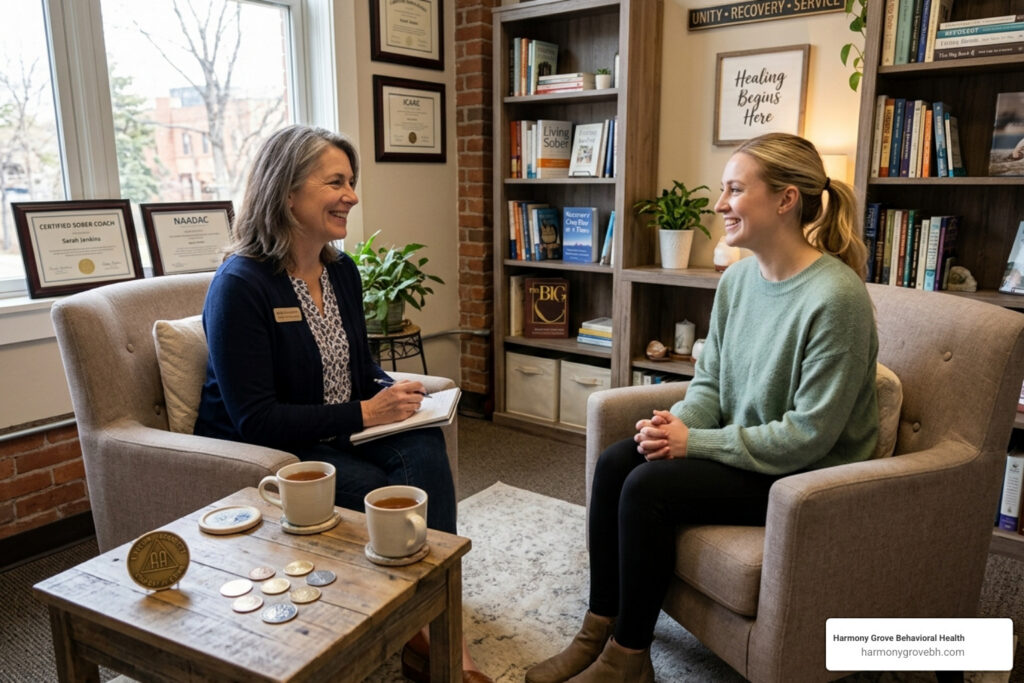
Why Becoming a Certified Sober Coach Is Worth It
A certified sober coach is one of the fastest-growing roles in the recovery field — and for good reason. More people are seeking personal, one-on-one support to stay sober after treatment. And more professionals with lived experience are turning that experience into a meaningful career.
Here is a quick look at the top certification paths available:
| Certification | Training Hours | Best For |
|---|---|---|
| CCAR Recovery Coach Professional (RCP) | 60 hours | Broad recovery support, national recognition |
| Certified Addiction Recovery Coach (CARC) | 60 hours (50 foundational + 10 elective) | Private practice, sober companionship |
| SHE RECOVERS Coach Designation | 12.5 hours | Women-focused, trauma-informed coaching |
| Sober Club Accredited Coach | Varies | UK-based, alcohol-focused coaching |
Recovery coaching is now a recognized profession with real accreditation bodies, ethical codes, and training standards. Over 110,000 individuals have been trained through CCAR programs worldwide. The SHE RECOVERS program has graduated over 200 coaches since launching in 2017.
But certification is about more than a credential. As one coaching framework puts it, the role fills “a painful missing piece for those in recovery — someone with hard-won, long-term lived experience to come alongside as a reliable, relatable guide.”
Whether you are exploring this as a career change or looking to formalize the support you already provide, this guide covers every major certification program, what each requires, and how to choose the right path for you.
What is a Certified Sober Coach?
A certified sober coach is a trained professional who provide non-clinical, peer-based support to individuals navigating life without drugs or alcohol. Unlike the sterile environment of a hospital or the rigid structure of some traditional programs, a coach meets the client where they are—literally and figuratively.
We view the role of a coach as a “resource broker.” They don’t just tell someone to “stay sober”; they help build recovery capital, which includes the internal and external resources (like stable housing, a supportive social circle, and improved self-esteem) needed to sustain long-term wellness. If you or someone you know is in immediate need of clinical help or crisis resources, the National Helpline for Mental Health, Drug, Alcohol Issues – SAMHSA is an essential starting point.
A certified sober coach focuses on:
- Goal-Oriented Action: Helping clients set and achieve specific milestones, like returning to work or repairing a relationship.
- Accountability: Providing a “high-touch” level of support, often involving daily check-ins.
- Professional Boundaries: While coaches share lived experience, they adhere to a strict code of ethics that maintains a professional relationship.
- Relapse Prevention: Identifying triggers and creating real-world action plans to navigate stressful events, such as weddings or professional high-pressure situations.
How a Certified Sober Coach Differs from a Therapist
It is common to confuse coaching with therapy, but the two are distinct tools in the recovery toolbox. At Harmony Grove Behavioral Health, we believe that Recovery Coaching works best when it complements clinical treatment rather than replacing it.
The main difference lies in the “temporal focus.” Therapists generally look at the past to diagnose mental health disorders and process deep-seated trauma. A certified sober coach, however, is present- and future-focused. They don’t provide diagnoses or “process” trauma; instead, they help you take action today to ensure you stay sober tomorrow.
Coaches also utilize “purposeful self-disclosure.” While a therapist maintains strict boundaries regarding their own life, a coach often uses their own recovery story to build rapport and offer hope. This “lived experience” is the secret sauce that makes coaching so relatable.
Certified Sober Coach vs. 12-Step Sponsor
While both roles offer support, a certified sober coach is a professional service, whereas a 12-step sponsor is a volunteer peer.
- The Scope: A sponsor’s primary job is to guide a “sponsee” through the 12 steps of a specific program (like AA or NA). A coach takes a holistic approach, looking at nutrition, sleep, career goals, and nervous system regulation.
- The Training: Anyone with a bit of sobriety can be a sponsor. A certified sober coach must complete dozens of hours of accredited training and adhere to professional ethical codes.
- The Availability: A sponsor is a friend you call when you’re struggling. A coach is a paid professional who may provide 24/7 on-call support, accompany you to stressful appointments, or even live with you as a sober companion during high-risk transitions.
Top Certification Programs for a Certified Sober Coach
Choosing the right certification is the first step toward your new career. You want a program that carries weight in the industry and provides you with the practical tools to handle real-world crises.

CCAR Recovery Coach Professional (RCP)
The Connecticut Community for Addiction Recovery (CCAR) is widely considered the “gold standard” in the industry. Their Recovery Coach Professional (RCP) designation is internationally recognized and signifies a high level of expertise.
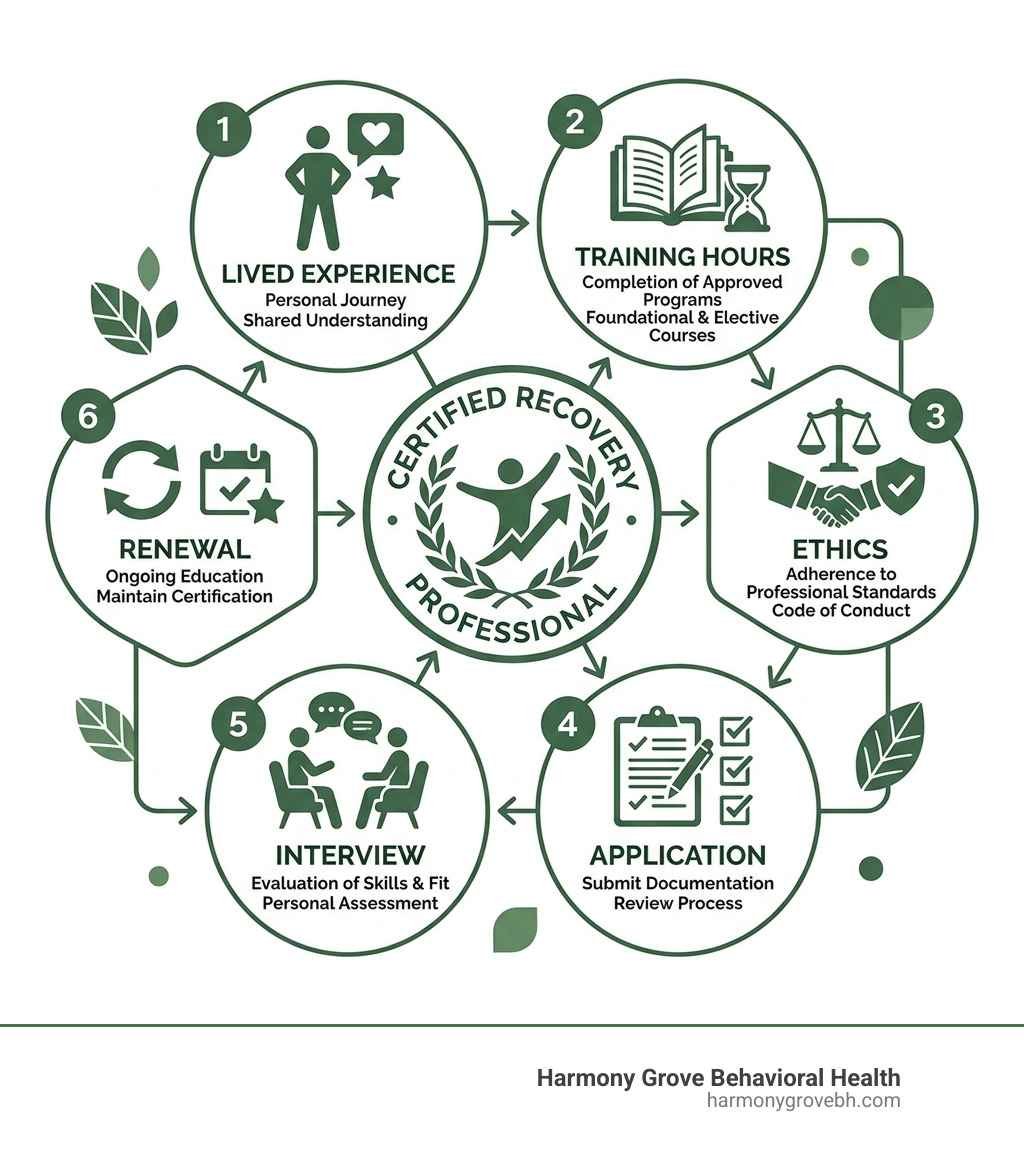
To earn the RCP, you must complete 60 hours of recovery-focused education. This includes:
- The Recovery Coach Academy (30 hours): The foundational course covering the roles and core values of a coach.
- Ethical Considerations (16 hours): A deep dive into boundaries, confidentiality, and professional conduct.
- Additional Electives (14 hours): Topics can include “Professionalism,” “Coachervision” (supervision for coaches), or coaching in emergency departments.
The RCP designation is valid for two years and requires an interview with a panel of CCAR leaders to ensure you embody the “spirit” of a recovery coach.
Certified Addiction Recovery Coach (CARC)
The CARC designation is a highly respected credential, particularly for those looking to establish a private practice or work in more formal settings. This program requires 60 total hours of training, split into 50 foundational hours and 10 elective hours.
What makes the CARC unique is its focus on credibility and professionalism. It covers topics like:
- Motivational Interviewing
- Medication-Assisted Treatment (MAT)
- Trauma-Informed Care
- LGBTQ+ Inclusive Coaching
The CARC does not require a specific “apprenticeship” or a national exam (unlike some peer advocate roles), making it an accessible but rigorous path for those wanting to work as independent certified sober coaches.
Training Requirements and Core Competencies
Becoming a certified sober coach isn’t just about having a good heart; it’s about having a specific set of skills. Training programs focus on several core competencies that ensure you can support a client through the “messy” parts of early sobriety.
- Motivational Interviewing: This is a clinical-style communication technique that helps clients find their own internal motivation to change.
- Trauma-Informed Care: Even though coaches don’t “treat” trauma, they must understand how it impacts a client’s behavior and triggers.
- Cultural Humility: Recognizing that recovery looks different for everyone based on their background, race, and identity.
- Crisis Prevention: Learning how to de-escalate a situation if a client is on the verge of a relapse or experiencing an emotional breakdown.
Building Your Career as a Certified Sober Coach
Once you are certified, recovery support opens up. Many coaches choose to specialize in “niche markets” to better serve specific populations.
- Executive Coaching: Working with high-profile professionals (CEOs, athletes, entertainers) who need absolute discretion and support navigating high-pressure roles without alcohol.
- Sober Companionship: This is an intensive, “live-in” form of coaching where you stay with a client for several days or weeks to ensure they survive a high-risk period, such as returning home from residential treatment.
- Safe Transport: Accompanying clients as they travel to and from treatment centers to prevent “impulse” relapses during travel.
- Case Management: Collaborating with therapists, doctors, and family members to ensure the client’s “recovery team” is all on the same page.
The Impact of Coaching on Recovery Outcomes
Does coaching actually work? The data says a resounding yes. Research from leading addiction research organizations found that individuals who utilized recovery coaching increased their average abstinence rate to 82%.
Furthermore, “Concierge” style recovery coaching has reported a 50-70%+ reduction in client relapse rates. By providing emotional stabilization and a structured “action plan,” coaches bridge the dangerous gap between the 24/7 supervision of a treatment center and the total independence of daily life.
As we see in Houston, the transition from a clinical setting back to the “real world” is where most relapses occur. A certified sober coach acts as a safety net during this transition, helping the client establish new routines, healthy sleep patterns, and improved nutrition.
Frequently Asked Questions about Sober Coaching
How much does it cost to get certified?
The cost varies depending on the path you choose. A full CCAR training package (including the application and interview fee) can cost around $1,200, though individual courses like the “Ethical Considerations” workshop might be around $150. Some organizations offer scholarships or adjusted pricing to make the training more accessible to those in the community.
Do I need to be in recovery to be a coach?
While “lived experience” is highly valued and many coaches are in long-term recovery themselves, it is not a strict requirement for all certifications. Many “allies” (family members or professionals) become coaches. However, having “been there, done that” often provides a level of empathy and relatability that is hard to teach in a classroom.
What services do certified coaches provide?
The beauty of being a certified sober coach is the flexibility. Common services include:
- 1:1 Coaching: Weekly virtual or in-person sessions.
- Sober Companionship: 24/7 intensive support.
- Interventions: Helping families guide a loved one into treatment.
- Family Support: Teaching family members how to set boundaries and stop enabling behaviors.
- Safe Transport: Ensuring a client gets from “Point A to Point B” without picking up a drink or drug.
Conclusion
At Harmony Grove Behavioral Health, we know that sobriety is a lifelong journey, not a destination. Our holistic, community-focused care in Houston, Texas, is built on the foundation of evidence-based practices and trauma-informed programming. But we also know that clinical treatment is just the beginning.
The role of a certified sober coach is vital in providing the lifelong aftercare support that keeps our community strong. Whether you are looking to hire a coach to protect your own recovery or you feel called to become a coach yourself, you are participating in a powerful process of transformation.
If you are ready to take the next step in your journey—either as a professional or as someone seeking support—we invite you to explore our resources. Start your journey with professional recovery coaching and see how a dedicated guide can make all the difference.