

What You Need to Know About Bipolar Disorder Treatment in Houston
Bipolar disorder treatment Houston residents need is more accessible than many people realize – and getting the right care can be life-changing.
Here’s a quick overview of what’s available:
- Diagnosis: Psychiatric evaluation and diagnostic interviews at local clinics and hospitals
- Medication: Mood stabilizers and antipsychotics, often personalized using genetic testing
- Therapy: CBT, DBT, group therapy, and family-focused therapy
- Levels of care: Outpatient, Intensive Outpatient (IOP), Partial Hospitalization (PHP), and inpatient programs
- Specialized care: Dual diagnosis programs for co-occurring substance use or trauma
- Advanced options: Transcranial magnetic stimulation (TMS) and research-driven treatments
- Crisis support: 24/7 inpatient stabilization and emergency services across Houston
Bipolar disorder – once called manic-depressive illness – is a mental health condition that causes intense mood swings. These swings cycle between emotional highs (mania or hypomania) and deep lows (depression). It isn’t just moodiness. These shifts can derail careers, relationships, and daily life.
The scale of this condition is significant. 5.7 million Americans live with bipolar disorder, and roughly 4.4% of U.S. adults will experience it at some point in their lifetime. Genetic factors alone account for 60-85% of the risk of developing the condition. For a general medical overview, the National Institute of Mental Health explains bipolar disorder in more detail.
For Houston professionals balancing demanding careers and personal responsibilities, an undiagnosed or untreated bipolar disorder can quietly escalate – especially when combined with stress, trauma, or substance use.
The good news? Houston has a strong network of treatment options. With 48 treatment centers serving the area, there are real paths forward – whether you’re newly diagnosed or looking for better long-term care.
Understanding Bipolar Types and Symptoms
When we talk about bipolar disorder, it’s important to realize it isn’t a “one-size-fits-all” diagnosis. It exists on a spectrum. Understanding which type you or a loved one might be experiencing is the first step toward effective bipolar disorder treatment Houston specialists can provide.
The Three Main Types
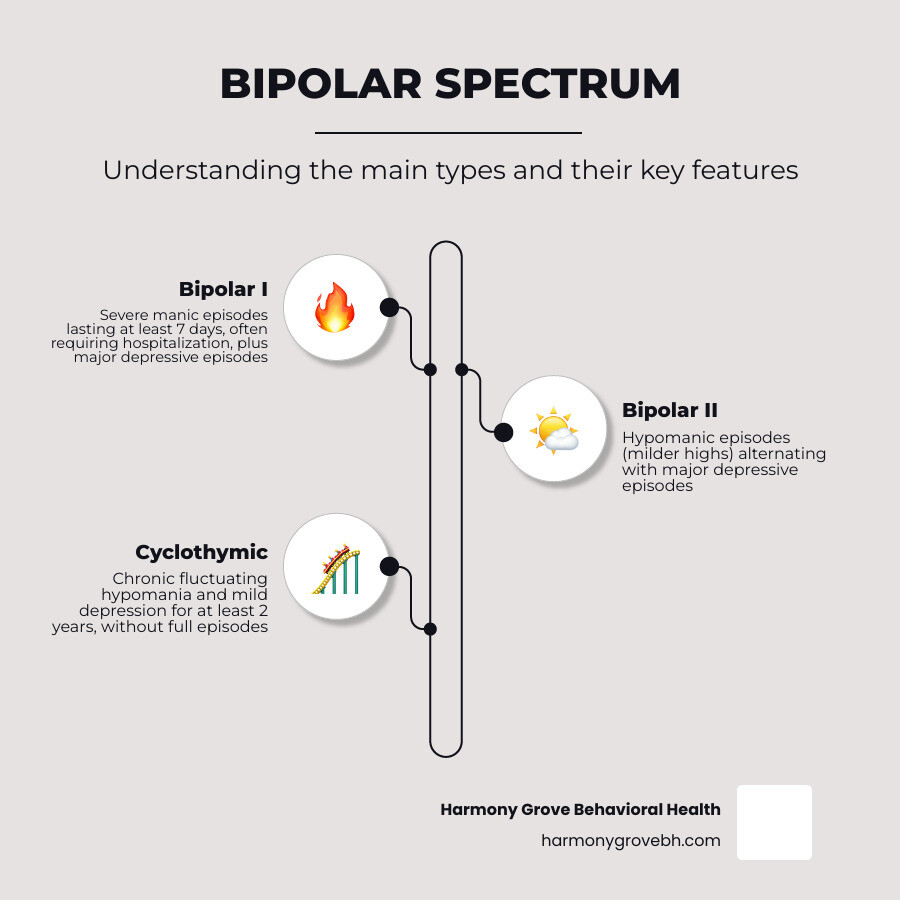
- Bipolar I Disorder: This is defined by manic episodes that last at least seven days or are so severe that the person needs immediate hospital care. Usually, depressive episodes occur as well, typically lasting at least two weeks.
- Bipolar II Disorder: This type involves a pattern of depressive episodes and hypomanic episodes. Hypomania is a less severe version of mania; while you might feel energized and “on top of the world,” it doesn’t typically lead to the same level of functional impairment or hospitalization as full-blown mania. However, the depressive side can be incredibly heavy.
- Cyclothymic Disorder (Cyclothymia): Think of this as a more chronic but milder version. It involves periods of hypomanic symptoms and periods of depressive symptoms lasting for at least two years (one year in children). While the “highs” and “lows” don’t meet the full clinical criteria for the other types, the constant fluctuation can be exhausting.
Recognizing the Episodes
Symptoms vary wildly depending on which “pole” a person is currently on.
Manic and Hypomanic Symptoms:
- Feeling “up,” “high,” or overly elated.
- Extreme irritability or “touchiness.”
- Feeling jumpy or wired.
- Decreased need for sleep (feeling full of energy after only three hours).
- Racing thoughts and talking very fast.
- Excessive appetite for food, drink, sex, or other pleasurable activities.
- Thinking you can do many things at once or taking on risky ventures.
Depressive Symptoms:
- Feeling very sad, “down,” empty, or hopeless.
- Feeling slowed down or restless.
- Trouble concentrating or making decisions.
- Forgetfulness.
- Lack of interest in almost all activities.
- Inability to do even simple tasks.
- Thoughts of death or suicide.
If you find that your “lows” are particularly dominant, you may want to explore more info about Depression Treatment in Houston TX to see how specialized care can help lift that weight.
The Role of Genetics and Biology
We often get asked, “Why me?” Research shows that bipolar disorder is one of the most heritable mental health conditions. Genetic factors explain 60–85% of the risk. If you have an immediate family member with the condition, your risk increases significantly. Beyond genetics, biological factors like neurochemical imbalances (involving dopamine and serotonin) and even brain structure play a role.
Common Triggers to Watch For
While biology sets the stage, environmental factors often act as the “trigger” for an episode. We see several common themes in Houston:
- Sleep Deprivation: Pulling all-nighters or having a disrupted sleep schedule is a major trigger for mania.
- High Stress: Major life changes, even positive ones like a promotion or a new baby, can spark an episode.
- Substance Use: Alcohol and drugs can mimic or trigger manic and depressive states.
- Seasonal Changes: Some people find their moods shift with the amount of daylight available.
Navigating Bipolar disorder treatment Houston
Finding the right bipolar disorder treatment Houston offers can feel like navigating a maze. Between the medical district and private clinics throughout the Montrose and Heights areas, the options are vast. But where do you start?
Diagnostic Assessments
A proper diagnosis is the foundation of everything. In Houston clinics, this usually starts with a comprehensive psychiatric evaluation. This isn’t just a quick chat; it involves a detailed look at your medical history, family history, and a “mood chart” to track your symptoms over time. Some local specialists even use GeneSight testing to see how your DNA might react to certain medications, taking the guesswork out of the prescription process.
The Professional Team
Managing bipolar disorder usually requires a multidisciplinary team. This might include:
- Psychiatrists: For medication management and specialized treatments like TMS.
- Psychotherapists: To help you navigate the emotional and behavioral aspects.
- Nurse Practitioners: Who often provide ongoing psychiatric care and monitoring.
For those looking for a broad range of support, Mental Health Services Houston provides a framework for integrating these different types of care.
Medication Management
Medication is often the “anchor” for bipolar stability. The goal isn’t to numb your emotions but to level the playing field so the highs aren’t dangerous and the lows aren’t paralyzing.
- Mood Stabilizers: These are the gold standard for preventing manic and depressive episodes.
- Antipsychotics: Often used to treat acute manic episodes or as a long-term maintenance tool.
- Antidepressants: These are used cautiously, as they can sometimes trigger a manic episode if not balanced with a mood stabilizer.
Evidence-Based Psychotherapy
While medication handles the biology, therapy handles the life skills. Two of the most effective methods are:
- Cognitive Behavioral Therapy (CBT): This helps you identify unhealthy thought patterns and replace them with constructive ones.
- Dialectical Behavior Therapy (DBT): This is fantastic for “emotional regulation.” It teaches you how to sit with uncomfortable feelings without acting on them impulsively.

First Steps to Seeking Help
If you suspect you have bipolar disorder, don’t wait for a crisis.
- Document your moods: Keep a simple log of your energy levels and sleep for a week.
- Schedule a consultation: Reach out to a Houston-based provider for a diagnostic interview.
- Be honest about substance use: It’s a judgment-free zone, and your doctor needs the full picture to help you safely.
Specialized Bipolar disorder treatment Houston for Co-occurring Issues
It is incredibly common for bipolar disorder to travel with “uninvited guests.” Many of our neighbors in Houston struggle with what we call a Dual Diagnosis. This is when someone has both a mental health condition like bipolar disorder and a substance use disorder.
When you’re in a manic phase, you might feel invincible and use substances to keep the “party” going. When you’re depressed, you might use alcohol or drugs to self-medicate the pain. Neither works long-term. In fact, substance abuse is a major trigger for the very episodes you’re trying to escape.
We also focus heavily on trauma-informed care. Many people with bipolar disorder have a history of trauma, which can complicate symptoms and make traditional treatments less effective if not addressed. By creating personalized plans that look at the “whole person” — including your history, your environment, and your physical health — we can create a much more stable foundation.
If this sounds like your experience, exploring Dual Diagnosis Treatment in Houston is a vital step toward integrated recovery.
Levels of Care and Local Houston Resources
Houston is home to some of the finest medical institutions in the world, offering access to cutting-edge research and novel treatments like neurostimulation.
However, “treatment” doesn’t always mean staying in a hospital. There is a continuum of care designed to meet you where you are.
Understanding the Levels of Care
- Inpatient Stabilization: This is for acute crises – when someone is a danger to themselves or others, or experiencing severe psychosis. It’s a short-term stay (usually 3-7 days) to get the person safe and stable.
- Partial Hospitalization Program (PHP): Think of this as “day hospital.” You spend the majority of your day in treatment but go home at night. It’s a great step-down from inpatient care.
- Intensive Outpatient Program (IOP): This offers several hours of therapy a few days a week. It allows you to maintain your work or school schedule while still receiving high-level support.
- General Outpatient: This is the “maintenance” phase, involving weekly or bi-weekly therapy and monthly medication checks.
For those requiring more intensive, long-term support, there are Long-term Mental Health Facilities in Houston Texas that offer residential-style care.
Comparing PHP and IOP
| Feature | Partial Hospitalization (PHP) | Intensive Outpatient (IOP) |
|---|---|---|
| Hours per day | 5-8 hours | 3 hours |
| Days per week | 5 days | 3-5 days |
| Living situation | Lives at home/sober living | Lives at home |
| Best for | Severe symptoms, high support needs | Moderate symptoms, transitioning back to life |
| Medical monitoring | Daily | Weekly or as needed |
Emergency and Crisis Resources
If you are in an immediate crisis in Houston, you have options:
- Local Psychiatric Emergency Services: Many local hospitals and specialized centers offer 24/7 crisis lines and psychiatric emergency evaluations.
- National Suicide Prevention Lifeline: Dial 988.
- Houston Crisis Text Line: Text “HOME” to 741741.
Lifestyle Management
Beyond the clinical walls, how you live your life in Houston matters.
- The “Houston Heat” Factor: Dehydration can actually affect the levels of certain mood stabilizers (like Lithium) in your blood. Stay hydrated!
- Support Groups: Organizations like NAMI Greater Houston offer peer-led support groups where you can talk to others who truly “get it.”
- Exercise: While it’s not a cure, regular physical activity can help manage the “restless energy” of hypomania and the lethargy of depression.
Frequently Asked Questions about Bipolar Care
What is the difference between depression and bipolar disorder?
This is a great question. While both involve periods of intense sadness, the key difference is the presence of “up” periods. Clinical depression (Unipolar Depression) only goes “down.” Bipolar disorder includes periods of mania or hypomania. Many people with Bipolar II are initially misdiagnosed with depression because they only seek help when they feel low, and they might view their hypomanic “up” periods as just being productive or having a “good week.”
Is bipolar disorder hereditary?
Yes, it is highly heritable. As mentioned, genetic factors explain 60–85% of the risk. However, genetics isn’t destiny. Having the “bipolar genes” doesn’t guarantee you’ll develop the condition; environmental triggers, stress levels, and lifestyle choices all play a part in whether those genes “turn on.”
How much does bipolar treatment cost in Houston?
The cost varies wildly based on the level of care.
- Insurance: Most major insurance plans (Aetna, Blue Cross Blue Shield, Cigna, etc.) cover mental health treatment due to parity laws.
- Out-of-Pocket: Private therapy in Houston can range from $100 to $250 per session, while psychiatric evaluations can be higher.
- Facility Costs: Residential or PHP programs are the most expensive but are often covered by insurance. We always recommend calling your insurance provider first to see what “in-network” options are available to you.
Conclusion
Living with bipolar disorder in a city like Houston can feel like trying to run a marathon while the ground is constantly shifting beneath your feet. But you don’t have to run it alone.
At Harmony Grove Behavioral Health, we believe that stability is possible for everyone. Our approach to bipolar disorder treatment Houston is rooted in the idea that you are more than a diagnosis. We provide a holistic, community-focused environment where evidence-based practices meet trauma-informed care.
Whether you need the structure of our Intensive Outpatient Program Houston or you’re looking for lifelong aftercare support to ensure you stay on track, we are here to help you find your level ground.
Recovery isn’t just about stopping the mood swings; it’s about reclaiming your life, your career, and your relationships. If you’re ready to take that first step, we’re ready to walk with you. Reach out to us today at our Houston location on Mangum Road. Let’s start the journey toward a more balanced, fulfilling life together.