

When You Need a Sober Companion Near Me: What to Know First
Searching for a sober companion near me is often one of the most important steps you can take after leaving rehab or during a high-risk period in your recovery.
Here’s a quick answer to what you’re looking for:
How to find a sober companion near you:
- Search online directories like SAMHSA’s treatment locator or recovery coach resource finders
- Ask your treatment center – most rehabs have referral networks for local sober companions
- Contact outpatient programs like Harmony Grove Behavioral Health, which can connect you with recovery support services
- Use recovery apps that list both local and virtual recovery coaches and companions
- Ask your therapist or case manager for vetted referrals in your area
The numbers are sobering. According to the National Institute on Drug Abuse, 40-60% of people relapse after addiction treatment. And roughly 90% relapse within a year of completing a 30-day inpatient program.
Those aren’t reasons to lose hope. They’re reasons to get the right support in place before you need it.
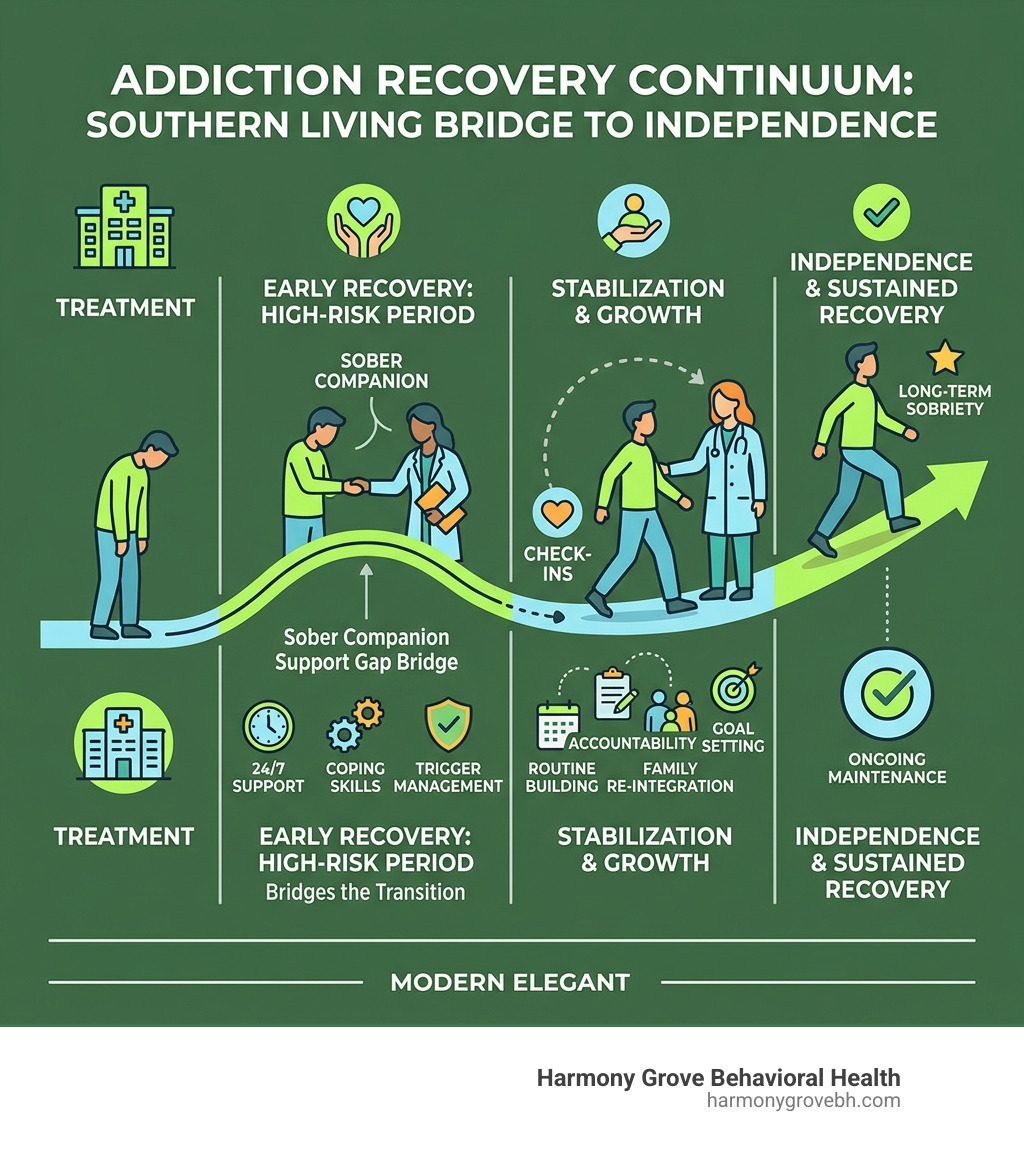
The period right after treatment – especially the first 90 days – is the most vulnerable window in recovery. You’re re-entering real life: work stress, family tension, social situations, and old triggers. A sober companion bridges the gap between the controlled environment of treatment and the unpredictability of everyday life.
For a busy Houston professional balancing career demands, relationships, and recovery, that kind of grounded, one-on-one support can make all the difference.
What is a Sober Companion and Why Do You Need One?
A sober companion is a trained professional who provides one-on-one, intensive support to individuals in recovery. Unlike a therapist who you might see for an hour a week, a companion is often by your side for several hours a day or even living in your home 24/7. They serve as a “living bridge” between the highly structured world of a treatment center and the often chaotic “real world.”
At Harmony Grove Behavioral Health, we believe that Recovery is Best Sustained with Support. While we provide clinical outpatient care in Houston, we recognize that the hours spent outside our facility are where the real work of sobriety happens.
Core Responsibilities of a Sober Companion
A sober companion wears many hats, but their primary goal is to keep you safe and accountable. Their core responsibilities usually include:
- 24/7 Monitoring: Providing a constant presence during high-risk periods to prevent impulsive decisions.
- Environmental Sweeps: Removing alcohol, drugs, or paraphernalia from your home or hotel room before you arrive.
- Safe Transportation: Escorting you to and from meetings, work, or social events where triggers might be present.
- Crisis Management: Intervening immediately if a craving hits or if you find yourself in a high-stress situation.
- Routine Building: Helping you establish healthy daily habits like exercise, meal planning, and regular sleep.
Why Peer Support Matters
It is important to understand that a sober companion fills a non-clinical role. They aren’t there to diagnose mental health conditions or prescribe medication. Instead, they provide peer-led guidance. Many companions have years of their own successful recovery under their belts, which allows them to offer a unique level of empathy. They’ve been in your shoes and know exactly what that “Day 5” or “Day 30” anxiety feels like.
This level of support is particularly vital during the post-rehab transition. When you leave a 30-day program, you are often “rehab-sober”—meaning you can stay clean in a bubble. But can you stay clean when you walk past your favorite bar or have a heated argument with a spouse? A sober companion near me ensures that you don’t have to face those first few triggers alone.
How to Find a Qualified Sober Companion Near Me
Finding the right person is about more than just a Google search; it’s about finding a professional who understands your specific lifestyle and challenges. If you are looking for a sober companion near me in the Houston area, you have several avenues to explore.

Local vs. Remote Support
While virtual coaching has become popular, there is a distinct advantage to finding local support. A local companion can physically accompany you to a high-stress business meeting at a downtown Houston restaurant or walk through your front door to help you clear out “trigger” items. Remote coaches are great for scheduled check-ins, but they cannot provide the physical “barrier” to relapse that an in-person companion offers.
The Vetting Process: What to Look For
Not all companions are created equal. Since this is an unregulated industry in many states, you must do your due diligence. When evaluating a sober companion near me, consider these factors:
- Lived Experience: Most reputable services require companions to have at least five years of continuous sobriety.
- Certification: Look for professionals who are Certified Recovery Peer Specialists (CRPS) or have completed recognized Recovery Coaching training.
- Background Checks: Ensure the individual or agency conducts thorough criminal background checks and health screenings.
- Professional Networking: A good companion should be well-connected with local Houston clinicians, therapists, and outpatient programs like ours to ensure a coordinated care plan.
Choosing a Sober Companion Near Me: 12-Step vs. Evidence-Based
One of the most important decisions you’ll make is choosing the philosophy of your support. Some companions are strictly 12-step focused, while others use a more clinical, evidence-based approach.
| Feature | 12-Step Approach | Evidence-Based Approach |
|---|---|---|
| Primary Goal | Total abstinence through the 12 steps | Sustainable lifestyle change and clinical stability |
| Focus | AA/NA meetings and sponsorship | Trauma-informed care and cognitive tools |
| Integration | Heavy focus on community meetings | Integration with therapy and medical care |
| Philosophy | Spiritual growth and “giving it up” | Behavioral psychology and Neurotransmitter repair |
At Harmony Grove Behavioral Health, we lean toward a holistic, trauma-informed model. We believe in personalized matching—pairing you with someone who shares your demographics, professional background, or specific life goals. If you’re an executive, you need a companion who understands the pressure of a boardroom, not just the steps of a program.
Integrating a Sober Companion Near Me into Your Aftercare Plan
A sober companion shouldn’t be a standalone solution. They are a piece of a larger puzzle. For our clients in Houston, we often recommend integrating a companion into a broader Aftercare Community.
This integration helps you manage high-risk triggers in real-time. For example, if you know that Friday evenings are your “danger zone,” your companion can plan a specific routine—perhaps a gym session followed by a healthy meal and an evening recovery meeting. This helps in How to Stop Drinking Alcohol: Practical Steps, Support, and Sustainable Change by replacing old, destructive habits with new, life-affirming ones.
The Benefits of Professional Recovery Support Services
The statistics regarding the first few months of sobriety are quite telling. National Institute on Drug Abuse averages show that 40-60% of people relapse within the first month after treatment. However, studies of clients who utilize a sober companion for the first 90 days show relapse rates dropping significantly—often below 15%.
The 90-Day Fragile Period
Why 90 days? Clinically, this is the time it takes for the brain’s chemistry to begin stabilizing. During this window, you are more prone to emotional volatility and “PAWS” (Post-Acute Withdrawal Syndrome). A professional companion provides the emotional regulation and trigger management needed to survive this period. They help you make A Clear Choice for Sobriety every single hour of the day.
Beyond Just Staying Sober
The benefits of a sober companion near me extend far beyond “not drinking” or “not using.” They help you rebuild your life from the ground up:
- Sober Transport: They can drive you to appointments, ensuring you don’t take a “detour” on the way.
- Family Mediation: They can act as a neutral third party during tense family dinners, helping to repair trust and model healthy communication.
- Life Skills: Many people in early recovery struggle with basic tasks like grocery shopping, budgeting, or dating. A companion coaches you through these “firsts.”
- Social Reintegration: Going to a wedding or a concert? Your companion goes with you, providing a discreet “exit strategy” if things get uncomfortable.
Understanding the Cost and Process of Working with a Companion
We won’t sugarcoat it: professional sober companion services are an investment. Because they involve high-level, one-on-one attention—often around the clock—the costs can be significant.
Private Pay and Insurance
Most sober companion services are private pay. Because these roles are non-clinical and peer-based, they are rarely covered by standard health insurance. However, many families view this as a necessary investment to protect the much larger “sunk cost” of a 30-day inpatient rehab stay. Preventing just one relapse can save tens of thousands of dollars in future treatment costs, legal fees, or lost wages.
The Process: From Consultation to Independence
Working with a sober companion near me usually follows a structured path:
- Initial Consultation: A case evaluation to understand your triggers, lifestyle, and specific needs.
- Personalized Recovery Plan: Creating a roadmap that includes daily schedules, meeting attendance, and specific “danger zones.”
- Implementation: The companion begins their service, whether that’s 24/7 live-in support or scheduled daily hours.
- The Step-Down Phase: As you gain confidence and stability, the companion’s presence is gradually tapered off. You might move from 24/7 support to 10 hours a week, then eventually to just a weekly check-in.
- Long-Term Stability: The ultimate goal is for you to no longer need the companion.
For more details on how these structured plans work, you can check out The Ultimate Guide to Virtual and Private Sober Coaching.
Frequently Asked Questions about Sober Companions
How does a sober companion differ from a sponsor or therapist?
A therapist is a licensed clinician who works with you in an office setting for an hour at a time to address mental health and trauma. A sponsor is a volunteer peer from a 12-step program who guides you through the steps for free.
A sober companion near me is a paid professional. Unlike a sponsor, they are available 24/7 and have a professional obligation to be with you. Unlike a therapist, they are in your “real world”—your home, your car, and your office—providing tactical, real-time support.
Is sober companion support confidential and discreet?
Absolutely. Most high-level companions are bonded and insured, and they operate with the highest level of professional ethics. For high-profile individuals or executives in Houston, companions can often pass as a “personal assistant” or “business associate” to protect your reputation while providing the accountability you need.
How long does a typical engagement with a companion last?
It varies wildly based on need. Some people hire a “sober escort” for a single weekend to attend a wedding or a high-stakes business trip. Others utilize a live-in companion for the “fragile 90 days.” In some cases, support may last for six months to a year as a person rebuilds their life. The goal is always a gradual tapering that leads to total independence.
Conclusion: Finding the Right Support in Houston
The journey to long-term sobriety isn’t meant to be walked alone. While Harmony Grove Behavioral Health provides the clinical foundation for your recovery through evidence-based practices and trauma-informed programming, a sober companion near me provides the real-world reinforcement that keeps those lessons alive.
If you are in the Houston area and feeling overwhelmed by the prospect of staying sober in your daily environment, don’t wait for a crisis to occur. Whether you need intensive 24/7 support or are looking for a community-focused outpatient program to anchor your recovery, we are here to help.
Our mission is to provide holistic, community-focused care that doesn’t just treat the addiction, but heals the person. From our evidence-based clinical work to our lifelong aftercare support, we are committed to your success.
Start your journey with professional recovery coaching today and give yourself the safeguard you deserve.